
Neuro-Luxury: Can AI Create Art That Truly Moves Us?

What if the next masterpiece to move you deeply had never known passion, suffering, or inspiration? Artificial intelligence can already create images. Tomorrow, it may learn to create emotions. A revolution that could redefine our understanding of art, value—and even luxury.
What If the Most Moving Work of Art You Ever Experience Was Never Created by a Human?
For months, the debate surrounding artificial intelligence and art has focused on one central question: can AI evaluate a work of art as accurately as a human expert?
That revolution is already underway.
Artificial intelligence can analyze millions of auction results, detect emerging market trends, assist specialists with attribution, and help collectors, galleries, family offices and investors make more informed decisions.
According to the Art Basel & UBS Global Art Market Report 2025, the global art market was worth approximately $57.5 billion in 2024. In an increasingly complex and data-driven market, information Whatitself is becoming a competitive advantage.
But the value of art has never been defined by price or beauty alone.
Provenance, rarity, cultural relevance, artist recognition, market liquidity and historical significance all contribute to an artwork's long-term value.
We explore this question in greater depth in our article: Art Investment: The True Value of a Work of Art.
Yet I believe the real revolution lies elsewhere.
The question is no longer simply whether AI will be able to determine the value of art.
The more fascinating question is whether artificial intelligence will one day create art capable of moving us as deeply as a human artist can.
Neuroscience Is Changing the Way We Understand Art
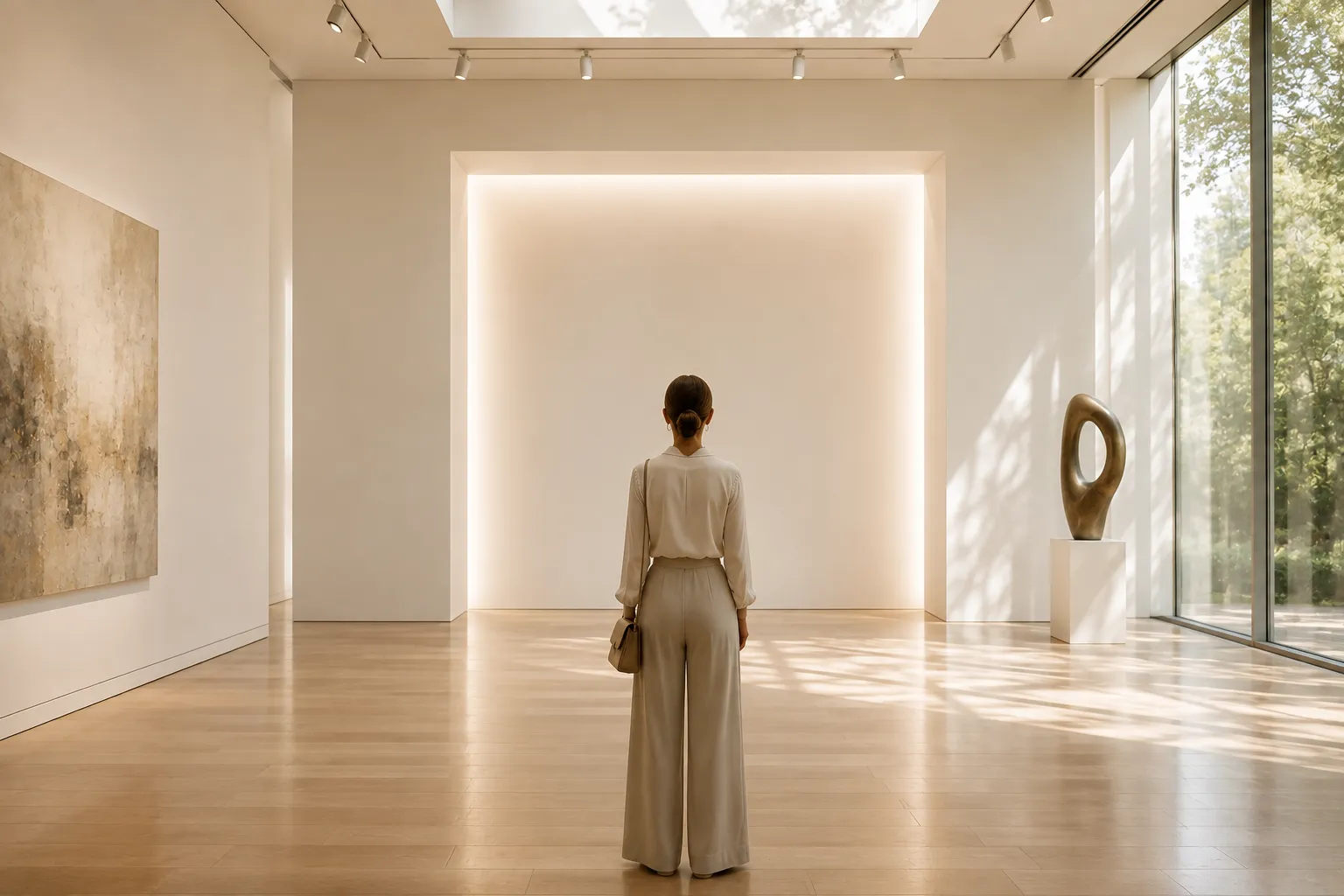 Before asking who created a work of art, perhaps we should ask another question: why does it move us?
Why can one painting stop us in our tracks while another, technically just as accomplished, leaves us completely indifferent?
The emerging field of neuroaesthetics is beginning to provide some answers.
Research by neuroscientist Professor Semir Zeki has explored how viewing art engages areas of the brain associated with pleasure and reward. Neurologist Anjan Chatterjee, a leading figure in neuroaesthetics, has also shown how our perception of beauty is shaped not only by what we see, but by memory, culture, context and emotional state.
In other words, we never experience art objectively.
Our brain is constantly interpreting it.
And this opens a fascinating possibility.
If science can increasingly understand the neurological mechanisms behind aesthetic emotion, could we eventually create artworks specifically designed to produce particular effects on the human brain?
Could art be designed not only to be beautiful, but also to calm us, stimulate creativity, improve concentration or enhance emotional well-being?
For several years, I have been exploring the connections between neuroscience, art, architecture, luxury real estate and experiential luxury.
This thinking lies at the heart of what I call Neuro-Luxury.
The idea is simple but potentially transformative: tomorrow's definition of luxury may no longer depend solely on the rarity of an object, but increasingly on its positive, measurable and lasting impact on our brain, emotions and quality of life, enabled by neuroscience, design and artificial intelligence.
Read more: Neuro-Luxury & Slow Luxury: How Neuroscience Is Redefining Luxury.
AI Could Make Art Deeply Personal
Artificial intelligence could soon create artworks tailored to individual people.
Based on personality, mood, stress levels or even biometric data, an artwork could theoretically be generated to encourage relaxation, stimulate creativity or improve concentration.
Imagine a digital artwork whose colors, forms, movement and light change in real time according to your heart rate or stress level measured by a connected device.
After an exhausting day, the artwork could shift toward softer tones and calming compositions.
Before an important meeting or creative session, it might evolve toward visual rhythms and palettes designed to stimulate attention and creativity.
But personalization could go even further.
Artificial intelligence could create unique works specifically designed for individual spaces.
A Mediterranean villa, an Alpine chalet, a luxury hotel suite and a corporate office would no longer necessarily display the same type of art.
Each artwork could be created to interact with the natural light, architecture, materials, proportions and purpose of the space.
We could move from universal art toward something radically different:
personalized emotional art.
And this evolution extends far beyond the art market.
It could transform architecture, hospitality, interior design, luxury real estate and workplaces.
Tomorrow, a luxury hotel might adapt the artwork displayed in a suite according to the emotional profile of its guest.
A private residence could incorporate AI-generated art designed to encourage relaxation after a long journey.
Corporate environments could use evolving artworks intended to improve concentration or reduce cognitive fatigue.
This vision is already central to Neuro-Luxury: environments in which art, design, architecture and artificial intelligence are no longer merely aesthetic, but become instruments of well-being, performance and quality of life.
Does Emotion Come From the Artwork — or the Artist?
This may ultimately be the most important question.
When we stand before a painting by Van Gogh or Rothko, are we moved only by color, composition and form?
Or are we also moved because we know that another human being lived, loved, doubted, suffered and left something of themselves behind in that work?
I like to think that human beings are mirrors.
The emotions of others touch us because they awaken something from our own story.
Perhaps art works in exactly the same way.
A great work of art may be a silent encounter between two human sensibilities: the person who created it and the person who experiences it.
Artificial intelligence will almost certainly learn to reproduce aesthetics with extraordinary sophistication.
It may also learn which colors, compositions, forms and visual rhythms are statistically more likely to trigger certain emotional responses.
But can it transmit human resonance?
Can an algorithm communicate vulnerability, memory, loss, desire or hope if it has never experienced any of them?
No one can answer that question yet.
And perhaps that is precisely what makes the future of AI-generated art so fascinating.
Neuro-Luxury: A New Definition of Value
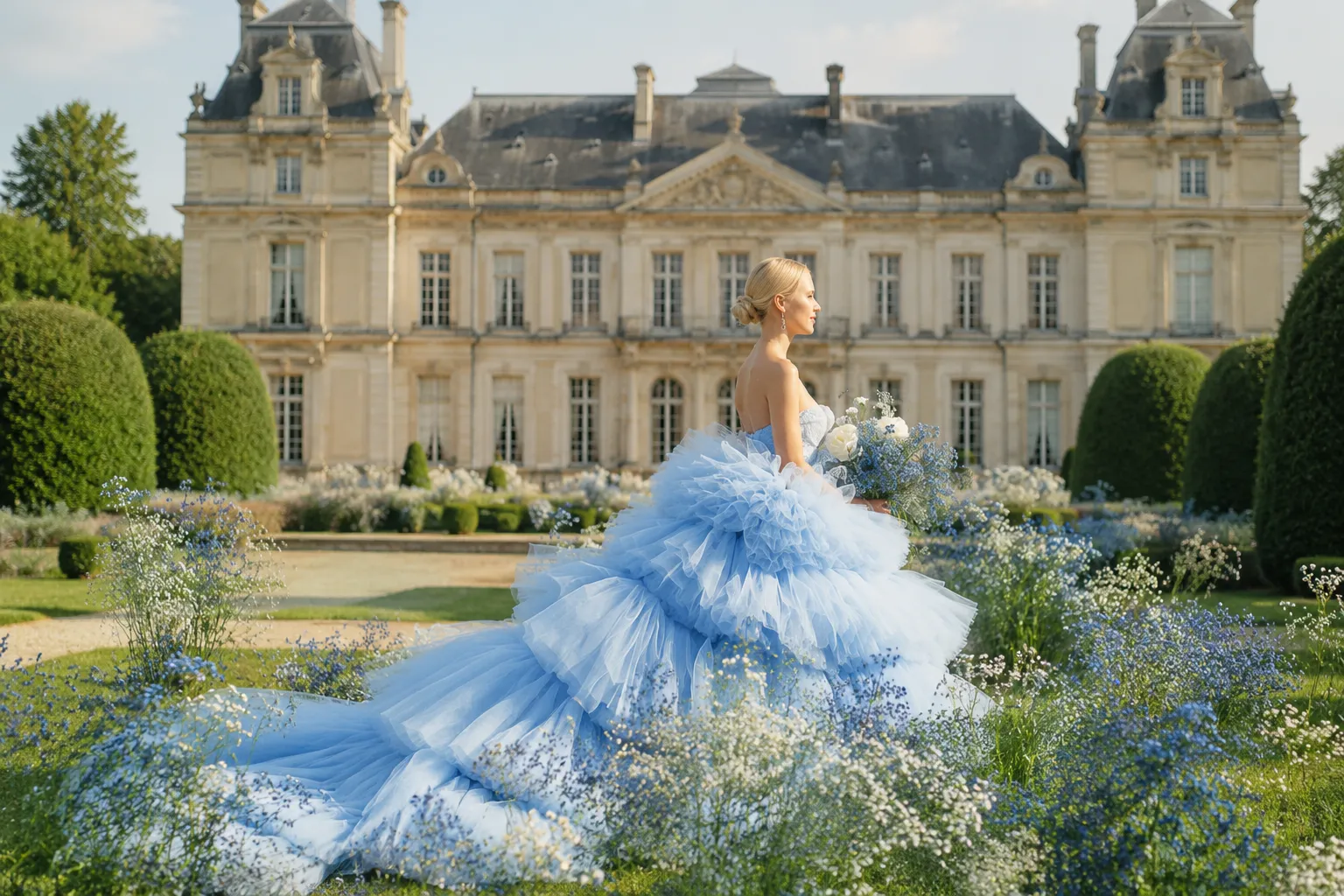 This question is part of a broader concept I have been developing: Neuro-Luxury.
For decades, luxury has been built around four fundamental pillars:
rarity, exclusivity, craftsmanship and heritage.
I believe a fifth pillar is now emerging:
the positive, measurable and lasting impact that an object, artwork or place can have on our brain, emotions and quality of life.
This idea extends far beyond art.
At Luxury World For You, it increasingly influences our editorial vision and our selection of exceptional properties, hotels and experiences where well-being becomes an integral component of luxury.
Luxury Wellness Is Already Moving in This Direction
The same evolution can be seen in luxury wellness, where hotels, spas, private residences and high-end destinations are increasingly integrating neuroscience, sensory design, biophilia and natural environments into the guest experience.
Explore our analysis: Wellness & Slow Luxury 2026: The New Trends Reshaping Luxury.
We also see this philosophy reflected in some of the exceptional hotels and resorts featured by Luxury World For You:
Discover Six Senses Uluwatu in Bali, where architecture, nature and well-being come together.
Historic Properties Could Become Part of the Neuro-Luxury Revolution
This concept is equally relevant to castles, châteaux and historic estates.
Their value is no longer determined solely by architectural significance or heritage.
Volumes, natural light, centuries-old materials, gardens, silence, views and connection with nature combine to create a powerful sensory experience — one capable of influencing our emotional state.
This is one reason historic properties could play an important role in the evolution of experiential luxury.
Read our analysis: Investing in a Château in France: Luxury, Heritage and a New Art of Living.
We find these characteristics in several exceptional properties currently presented by Luxury World For You, particularly historic estates surrounded by extensive parkland where architecture and nature exist in constant dialogue.
Luxury Real Estate Is Also Becoming More Emotional
A new generation of luxury residences is increasingly designed around natural light, openness, landscape, sensory materials and connection with nature.
The objective is no longer simply to create a spectacular home.
It is to create an environment that feels good to live in.
Discover an exceptional villa in Madeira designed around well-being and connection with nature.
According to the Deloitte Private & ArtTactic Art & Finance 2025 report, technological and experiential dimensions are playing an increasingly important role in the way art and value are perceived.
Tomorrow, an artwork may therefore be appreciated not only for its creator, rarity or market value, but also for its ability to reduce stress, enhance well-being, stimulate creativity or sustainably improve quality of life.
FAQ: Artificial Intelligence, Art and Neuro-Luxury
Can Artificial Intelligence Create Original Art?
Yes. Today's generative AI models can create new images and artworks from text prompts, existing images and artistic references.
However, while these creations may be visually original, the debate surrounding their emotional, cultural and artistic significance remains unresolved.
The real question is no longer whether artificial intelligence can generate an image.
It clearly can.
The question is whether AI-generated art can move us as deeply as art created through human experience.
Will Artificial Intelligence Replace Artists?
Artificial intelligence is unlikely to replace artists entirely.
Instead, AI is likely to become a powerful tool for creation, experimentation and collaboration.
Photography did not eliminate painting. Digital tools did not eliminate traditional art.
In the same way, artificial intelligence may open new creative territories without replacing the human sensitivity, experience and intention that define artistic creation.
Can Neuroscience Explain Why Art Moves Us?
Partially.
Research in neuroaesthetics suggests that our brains respond to visual elements including color, light, shape, proportion and contrast.
But aesthetic perception also depends on personal history, memory, culture, expectations and emotional state.
That is why the same artwork can produce radically different emotional reactions in different people.
What Is Neuro-Luxury?
Neuro-Luxury explores the application of neuroscience to luxury, art, design, architecture, hospitality and high-end real estate.
The concept proposes moving beyond the traditional idea of luxury as something rare, expensive or prestigious.
Instead, luxury experiences could increasingly be designed to create a positive and lasting impact on well-being, emotion and quality of life.
Discover our full analysis: Neuro-Luxury: How Neuroscience Is Redefining Luxury.
What Role Will Artificial Intelligence Play in the Art Market?
AI is already helping art professionals analyze market trends, estimate values, identify anomalies, manage collections and detect potential investment opportunities.
In the future, artificial intelligence could go much further by personalizing artistic experiences according to individual preferences, environments and emotional responses.
Why Are Châteaux and Heritage Properties Relevant to Neuro-Luxury?
Historic châteaux and exceptional estates offer far more than financial or architectural value.
Their architecture, gardens, natural light, materials, proportions and surrounding landscapes create complex sensory experiences capable of influencing how we feel.
They therefore provide a compelling illustration of Neuro-Luxury, where the value of a place can also be measured through its impact on quality of life.
Read more: Investing in a Château in France: Luxury, Heritage and Quality of Life.
What Is the Connection Between Wellness and Art?
Modern wellness is no longer limited to spas and treatments.
It increasingly incorporates architecture, natural light, materials, acoustics, landscape, interior design and art to create environments that encourage relaxation, concentration and emotional balance.
Because our surroundings influence the way we feel, art and wellness are becoming increasingly interconnected.
Explore: Wellness & Slow Luxury: The New Trends Reshaping Luxury.
Will the Future of Luxury Be More Emotional Than Material?
This may be one of the most important transformations currently taking place in luxury.
Consumers are increasingly seeking experiences that provide meaning, well-being and lasting emotion.
In this context, the value of an artwork, luxury object or exceptional property may increasingly be judged not only by its rarity, heritage or price, but by its ability to positively influence quality of life.
That is the philosophy at the heart of Neuro-Luxury.
The Next Art Revolution May Take Place Inside Us
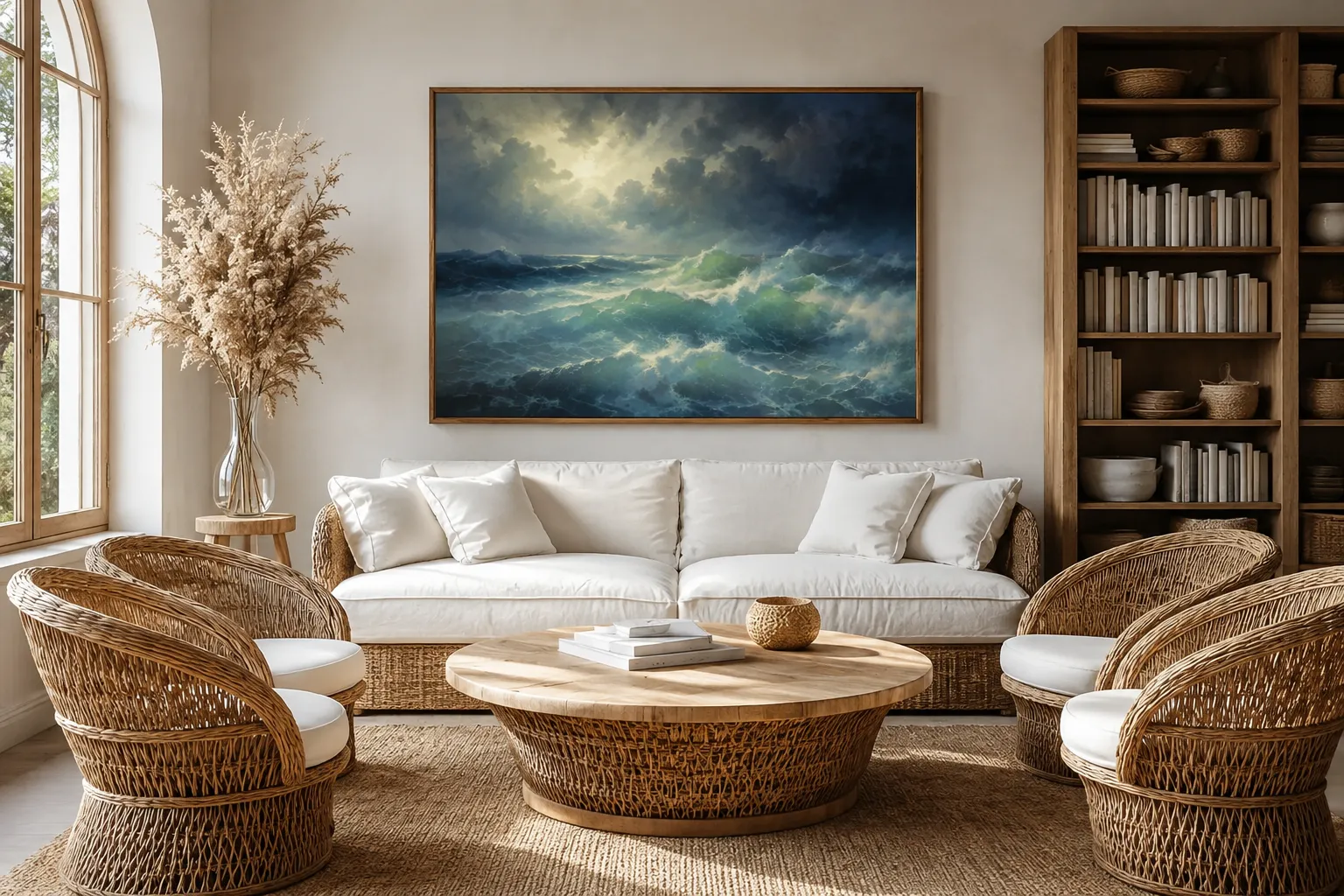 Who created this artwork — a human artist or artificial intelligence?
Perhaps that is no longer the most interesting question.
Perhaps the real question is:
How does it make us feel?
For centuries, one of the first questions asked about a work of art has been:
“Who created it?”
Tomorrow, another question may become equally important:
“What does this artwork do to my brain, my emotions and my well-being?”
If an artwork created by artificial intelligence can genuinely and sustainably reduce stress, stimulate creativity or improve our quality of life, does the absence of a human creator necessarily make it less valuable?
Perhaps the real AI revolution in art will not be its ability to imitate artists.
Perhaps it will be its ability to create deeply personalized aesthetic experiences, informed by neuroscience and adapted to each individual.
This is precisely the thinking behind Neuro-Luxury: a vision of luxury in which value is no longer measured solely through rarity, prestige and heritage, but also through its positive, measurable and lasting impact on our brain, emotions and quality of life.
From this perspective, art, architecture, design, heritage and wellness are no longer separate worlds.
They become different dimensions of the same experience.
Because perhaps the ultimate value of luxury will no longer lie simply in what we own.
It will lie in what we feel.
And what if tomorrow's greatest masterpiece is not the one that sells for the highest price… but the one that genuinely makes us feel better?
At Luxury World For You, we believe the luxury of tomorrow will no longer be defined solely by rarity and prestige, but increasingly by its ability to improve quality of life. This conviction shapes our editorial vision, our selection of exceptional properties and our ongoing exploration of Neuro-Luxury.


