
Neuro-Luxury: How Emotional Engineering Is Redefining Slow Luxury & Ultra-Prime Real Estate

Neuro-Luxury is redefining Slow Luxury through a more emotional and regenerative approach, opening a new era of contemporary luxury centered on wellness, mental recovery, and quality of life. In this article, discover the world’s most iconic Neuro-Luxury destinations — from Comporta to Koh Samui — as well as a new generation of ultra-premium villas and resorts designed around wellness, silence, emotional balance, and regenerative living.
Neuro-Luxury: The Emotional Engineering Behind the New Era of Slow Luxury
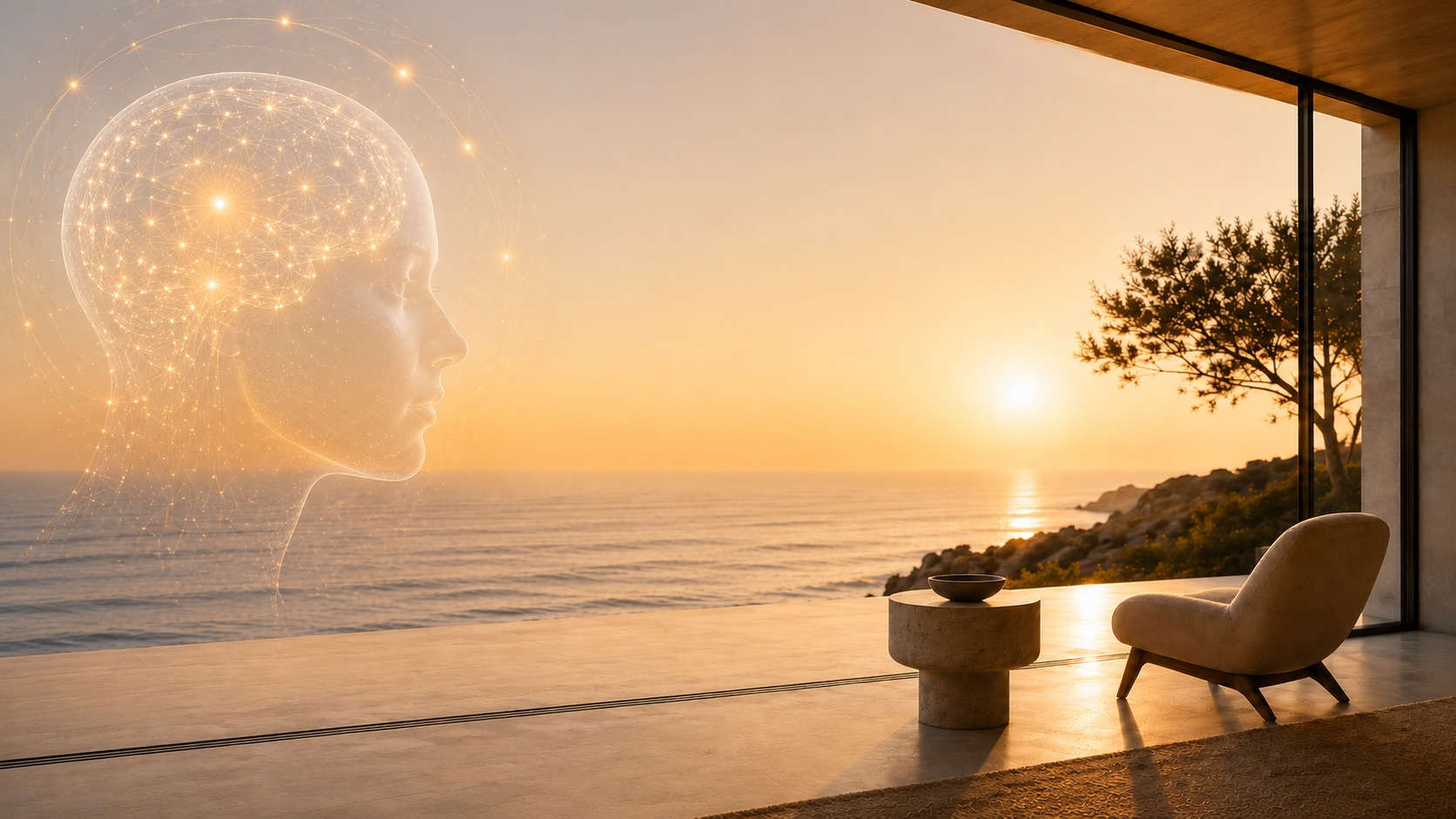 The global luxury industry is undergoing one of its most profound transformations in decades.
For years, ultra-prime real estate was defined by visibility, iconic addresses, and status-driven ownership. But in 2026, Ultra-High-Net-Worth investors are increasingly prioritizing a new category of luxury assets centered around emotional well-being, cognitive recovery, longevity, and quality of life.
In a world shaped by hyperconnectivity, digital fatigue, and constant cognitive overload, the ultimate luxury is no longer excess — but the ability to preserve mental clarity, emotional balance, and human performance.
From regenerative wellness estates and low-density coastal retreats to neuro-architectural villas and longevity-focused resorts, a new generation of luxury real estate is emerging at the intersection of neuroscience, wellness, and investment strategy.
This new paradigm has a name: Neuro-Luxury.
Neuro-Luxury: From Lifestyle Luxury to Cognitive Luxury
Neuro-Luxury represents the next evolution of the global Slow Luxury movement — transforming luxury from a status symbol into a tool for cognitive performance, emotional balance, and long-term well-being.
While traditional Slow Luxury emphasized time, privacy, emotional experiences, and conscious living, Neuro-Luxury introduces a far more strategic dimension by integrating neuroscience, wellness innovation, emotional architecture, circadian design, and longevity-focused environments into ultra-prime real estate and lifestyle investments.
In 2026, luxury is no longer defined solely by aesthetics, visibility, or exclusivity.
The new ultra-premium market is increasingly shaped by environments capable of reducing stress, enhancing mental recovery, improving sleep quality, and optimizing human performance.
From neuro-architectural villas and regenerative wellness resorts to low-density coastal retreats and longevity-focused private estates, a new category of luxury assets is emerging — one designed not only to impress, but to protect cognitive energy and emotional well-being.
Luxury becomes neurological.
Emotional.
Regenerative.
And increasingly valuable from both a lifestyle and investment perspective.
Slow Luxury vs Neuro-Luxury: What’s the Difference?
Slow Luxury is above all a philosophy centered on time, calmness, exclusivity, and quality of life.
It values:
-
digital disconnection,
-
emotional experiences,
-
silence,
-
connection with nature,
-
and a more conscious approach to contemporary luxury living.
Neuro-Luxury represents the scientific evolution of this movement.
It is no longer only about slowing down, but about understanding how:
-
architecture,
-
natural light,
-
materials,
-
landscapes,
-
and emotional environments
directly influence:
-
the brain,
-
stress levels,
-
sleep quality,
-
cognitive recovery,
-
and neurological well-being.
While Slow Luxury redefines the modern art de vivre, Neuro-Luxury seeks to optimize emotional balance, mental recovery, and human performance through spaces intentionally designed to regenerate both body and mind.
This new vision of luxury is increasingly shaping ultra-prime real estate, wellness resorts, regenerative hospitality, and luxury investment strategies worldwide.
Discover our full analysis of Slow Luxury and the emerging trends redefining emotional luxury in our article:
Slow Luxury 2026: International Luxury Real Estate & Wealth Investment Strategies
Why UHNW Investors Are Moving Toward Neuro-Luxury
For Ultra-High-Net-Worth individuals, the definition of luxury is undergoing a strategic transformation.
In 2026, the world’s wealthiest investors increasingly recognize that the ultimate scarce assets are no longer simply land, art, or prime addresses — but time, cognitive energy, emotional balance, and long-term quality of life.
As a result, the modern elite are shifting away from purely status-driven trophy assets toward environments specifically designed to reduce stress, improve sleep quality, accelerate mental recovery, and preserve emotional well-being.
This evolution is reshaping demand across the global ultra-prime real estate market.
Today’s strongest-performing luxury destinations increasingly share the same characteristics:
-
low-density living,
-
protected natural environments,
-
wellness-focused infrastructure,
-
emotional privacy,
-
advanced security,
-
and biophilic architecture designed around human well-being.
From private coastal estates and regenerative wellness resorts to neuro-architectural villas immersed in nature, luxury real estate is becoming deeply connected to neuroscience, longevity, and cognitive performance.
In many ultra-prime markets, these emotional and wellness-driven factors are now influencing long-term value appreciation as strongly as location itself.
The future of luxury real estate is no longer only about prestige.
It is about protecting human performance in an increasingly overstimulated world.
Neuro-Luxury as an Investment Thesis
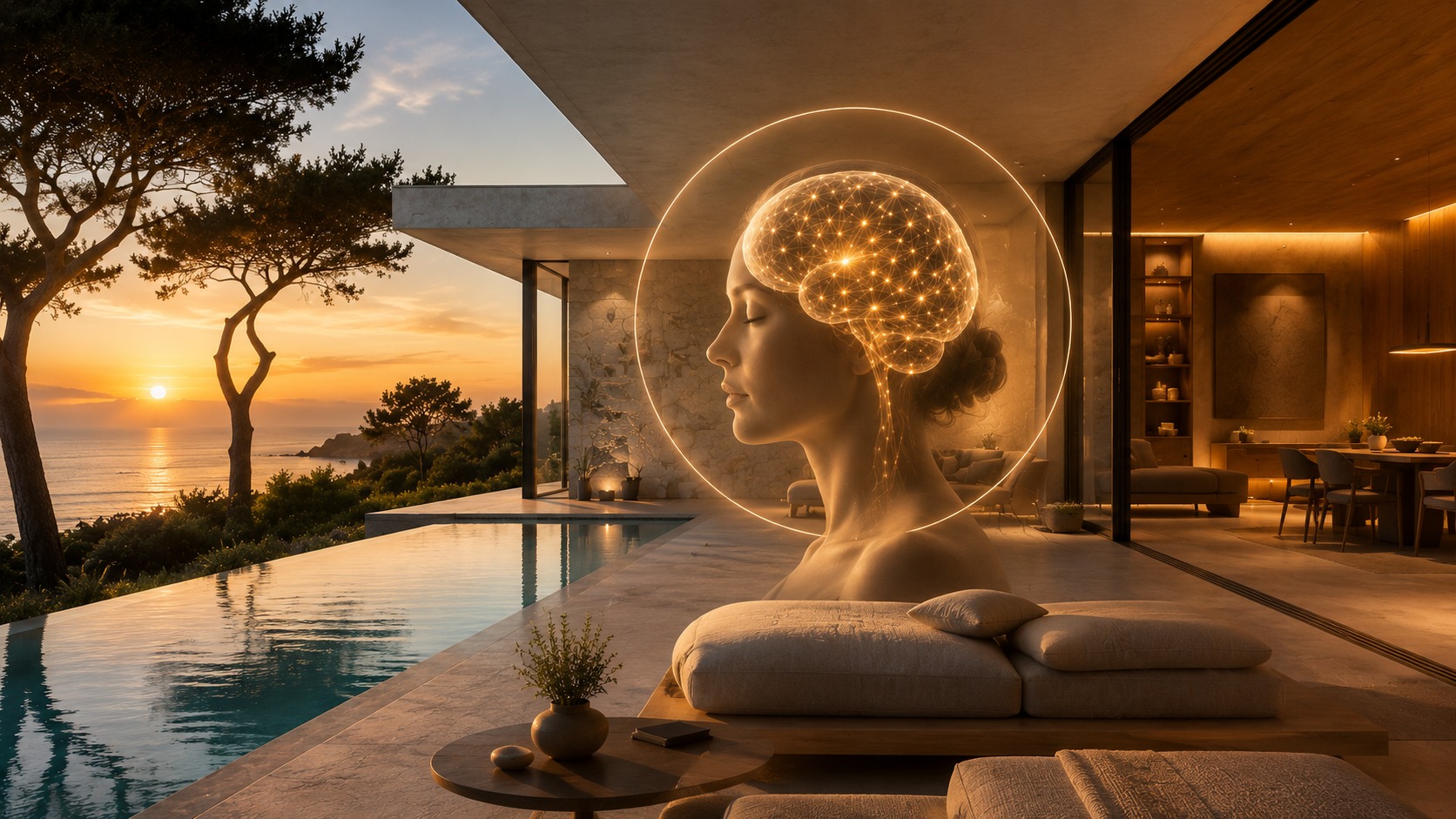 Neuro-Luxury is no longer simply a lifestyle movement — it is rapidly emerging as one of the most compelling new investment categories within ultra-prime real estate.
As global wealth shifts toward wellness, longevity, and emotional well-being, investors increasingly recognize that properties designed around cognitive recovery and regenerative living benefit from powerful long-term fundamentals:
-
stronger international demand,
-
scarcity-driven pricing,
-
higher resilience during economic cycles,
-
premium luxury rental performance,
-
and significant long-term capital appreciation potential.
The global luxury market is progressively moving away from purely “visible luxury” toward a new era of experiential, wellness-driven, and emotionally regenerative luxury assets.
This transformation reflects broader macroeconomic trends shaping the future of global wealth:
-
the rapid expansion of the longevity economy,
-
growing demand for mental wellness,
-
biohacking and preventive health technologies,
-
wellness hospitality,
-
and the rise of experience-based luxury consumption.
From neuro-architectural villas and wellness-focused private estates to regenerative resorts and low-density coastal sanctuaries, Neuro-Luxury real estate is becoming increasingly aligned with the future priorities of Ultra-High-Net-Worth buyers.
In many ultra-prime destinations, emotional value is now translating directly into financial value.
The future of luxury real estate is no longer defined solely by ownership or prestige.
It is increasingly defined by a property’s ability to enhance human performance, emotional balance, and long-term quality of life.
According to the Global Wellness Institute, the global wellness economy is projected to exceed $8.5 trillion by 2027, while wellness real estate continues to rank among the fastest-growing sectors of luxury investment worldwide.
This rapid expansion reflects a profound shift in Ultra-High-Net-Worth lifestyles, where emotional well-being, longevity, cognitive recovery, and regenerative living are increasingly influencing both luxury consumption and ultra-prime real estate investment strategies.
The New Drivers of Ultra-Prime Real Estate Value
Emotional Architecture: Designing for Human Performance
In the era of Neuro-Luxury, architecture is no longer viewed solely through the lens of aesthetics or prestige. It is increasingly designed as a tool for emotional regulation, cognitive recovery, and overall human well-being.
Open layouts, natural materials, seamless indoor-outdoor living, ocean views, and fluid spatial circulation are becoming strategic components of ultra-prime real estate because they directly influence:
-
stress reduction,
-
emotional comfort,
-
nervous system regulation,
-
and mental clarity.
This emerging concept of emotional architecture is rapidly redefining the standards of high-end property development.
For luxury investors and developers, the future value of real estate increasingly lies not only in location, but in a property’s ability to positively impact the human experience.
Natural Light & Circadian Optimization
Natural light has become one of the most valuable invisible assets in luxury real estate.
Today’s ultra-premium residences increasingly integrate circadian lighting systems and biophilic design principles aimed at optimizing:
-
sleep quality,
-
cognitive performance,
-
energy levels,
-
mood,
-
and mental recovery.
For Ultra-High-Net-Worth individuals operating across multiple time zones and high-performance professional environments, cognitive optimization is becoming a critical component of luxury living.
In this new market dynamic, light itself becomes a premium infrastructure asset.
Silence as the New Luxury Asset
In a hyperconnected and overstimulated world, silence is emerging as one of the rarest and most desirable forms of luxury.
Advanced acoustic engineering, low-density communities, private estates, and protected natural surroundings are increasingly essential criteria for UHNW buyers seeking emotional balance and cognitive privacy.
The luxury market is entering a new era where mental clarity becomes a defining element of value creation.
A property’s ability to reduce sensory overload and preserve psychological well-being may soon become as important as architecture, location, or exclusivity itself.
Wellness, Longevity & Biohacking Infrastructure
Neuro-Luxury also reflects the growing convergence between ultra-prime real estate and the global wellness economy.
A new generation of luxury properties now integrates advanced wellness and longevity-focused infrastructure, including:
-
cryotherapy,
-
sleep optimization technologies,
-
preventive medicine,
-
longevity clinics,
-
meditation and mindfulness spaces,
-
personalized nutrition,
-
and cognitive recovery technologies.
Luxury residences increasingly evolve into long-term performance ecosystems designed to optimize health, energy, emotional resilience, and quality of life.
The future of ultra-prime real estate is no longer simply residential.
It is regenerative, wellness-driven, and increasingly aligned with the global longevity economy.
The New Global Destinations of Neuro-Luxury
Comporta: Europe’s Neuro-Luxury & Quiet Luxury Capital
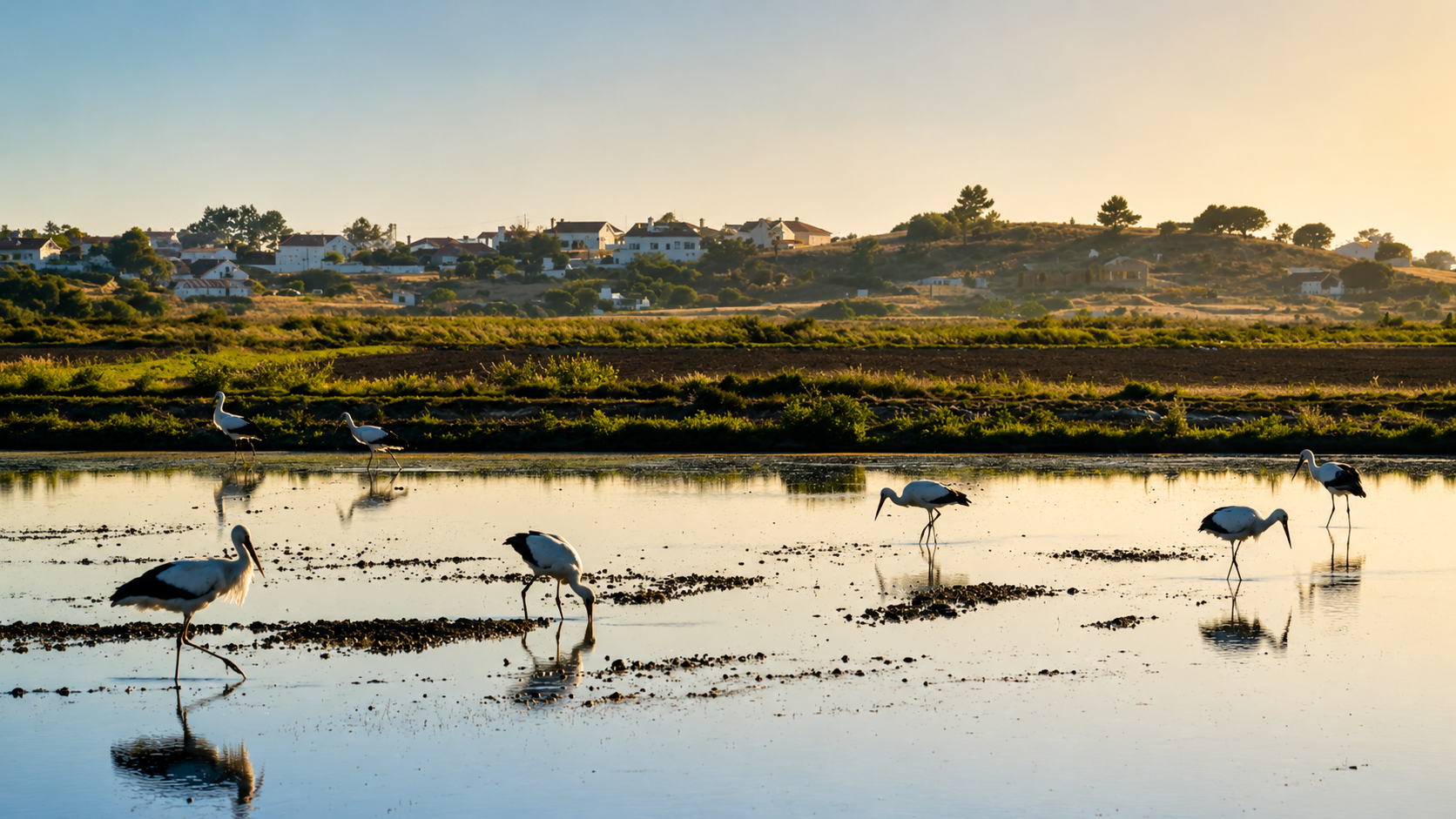 With its exceptional natural light, untouched dunes, minimalist villas, and ultra-discreet lifestyle, Comporta embodies a new generation of emotional luxury where silence, space, and connection to nature have become the ultimate symbols of contemporary prestige.
Long considered one of Europe’s best-kept secrets among the international elite, Comporta is now experiencing a spectacular transformation driven by the rise of Neuro-Luxury Real Estate and the global Slow Luxury movement.
One of Europe’s Strongest Ultra-Prime Growth Markets
Today, Comporta’s luxury real estate market ranks among the fastest-growing ultra-prime destinations in Europe.
In 2024, average prices reached approximately €9,000/m², while some newly built ultra-luxury villas now exceed €15,000/m² in the region’s most exclusive locations.
Certain ultra-prime sectors of Comporta have recorded annual price growth estimated at up to +28%, while the Portuguese property market itself experienced record growth exceeding +16% in 2025.
This acceleration is fueled by several structural drivers:
-
land scarcity,
-
strict construction restrictions,
-
low-density development,
-
and rapidly increasing international demand for a more discreet, emotional, and regenerative form of luxury.
What was once a confidential retreat for Europe’s creative and financial elite is progressively becoming one of the world’s most desirable Neuro-Luxury destinations.
The Comporta–Melides corridor is now widely viewed as one of the emerging global territories of Quiet Luxury, wellness-driven living, and emotional real estate investment.
Through properties such as CONTEMPORARY OASIS VILLA À COMPORTA, Neuro-Luxury transforms high-end real estate into a deeply emotional, sensory, and neurological experience — where architecture, natural light, and immersive connection to nature become the new pillars of contemporary luxury.
Discover CONTEMPORARY OASIS VILLA À COMPORTA — a new vision of Neuro-Luxury blending emotional architecture, regenerative living, and contemporary Slow Luxury lifestyle.
Melides — Where Bohemian Chic Meets Neuro-Luxury Real Estate
Today, many international investors consider Melides the future ultra-prime frontier of Portugal.
As Comporta becomes increasingly visible and more established, Melides attracts a global clientele seeking:
-
absolute privacy,
-
expansive private estates,
-
villas seamlessly integrated into nature,
-
and a far more emotional and regenerative approach to luxury living.
The region’s rapid rise is also supported by the arrival of internationally renowned figures from the worlds of fashion, art, and design.
Among the most emblematic projects is Villa Salvada in Melides — a property that has become a symbol of Portugal’s new bohemian Neuro-Luxury movement, combining emotional aesthetics, nature-integrated architecture, and the spectacular rise of ultra-prime real estate in the region.
Imagined by Christian Louboutin, the property combines:
-
architecture fully integrated into nature,
-
bohemian chic aesthetics,
-
organic materials,
-
omnipresent natural light,
-
and a profound connection with the wild landscapes of Portugal’s Alentejo region.
With its artistic universe, ultra-discreet approach to luxury, and deeply sensory philosophy, Villa Salvada perfectly illustrates the Neuro-Luxury concept:
a calmer, more emotional form of luxury intimately connected to human well-being.
Far beyond a simple luxury residence, Villa Salvada represents a new generation of ultra-prime properties where silence, space, emotional balance, and regenerative living become the defining markers of contemporary international luxury.
The project also contributes to the spectacular rise of ultra-prime real estate throughout the Comporta–Melides corridor, now increasingly viewed as one of Europe’s leading territories for Quiet Luxury, Slow Luxury lifestyle, and wellness-driven real estate investment.
Spend a regenerative weekend at Villa Salvada by Christian Louboutin in Melides — an immersive escape between wild nature, Quiet Luxury, emotional architecture, and contemporary Slow Luxury living.
Mauritius: The Emotional & Regenerative Neuro-Luxury Destination
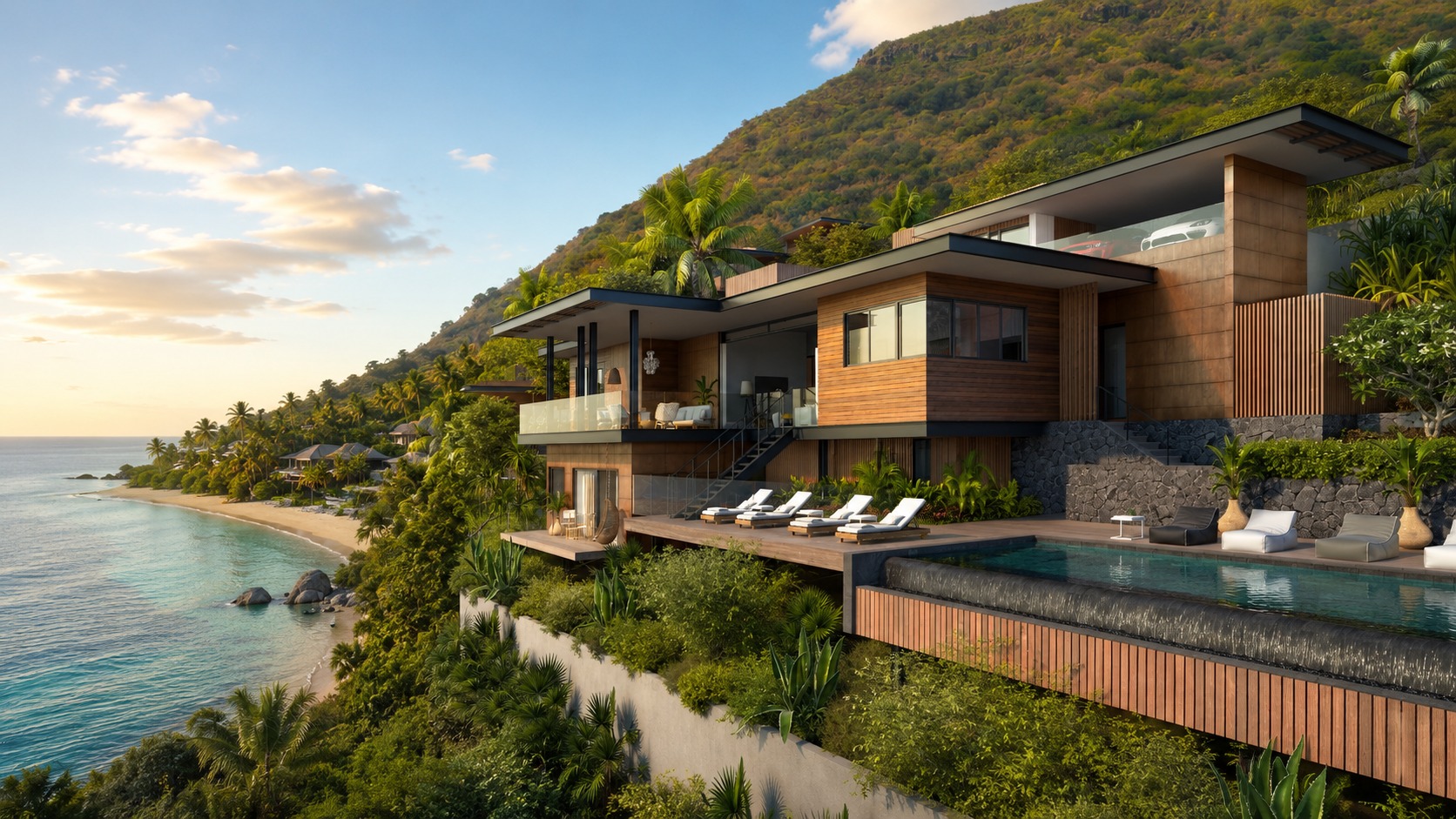 Contemporary ultra-luxury villa in Mauritius with an infinity pool overlooking the Indian Ocean, modern tropical architecture, and a lush natural environment.
Between turquoise lagoons, preserved tropical landscapes, and a deeply soothing lifestyle, Mauritius is rapidly emerging as one of the world’s leading destinations for Neuro-Luxury and the international Slow Luxury lifestyle.
The island increasingly attracts UHNW individuals seeking:
-
emotional balance,
-
wellness,
-
mental recovery,
-
security,
-
and a more regenerative quality of life.
This new vision of luxury is also reflected in the growing development of ultra-premium villas located within exclusive golf resorts, where nature, sport, wellness, and emotional real estate converge.
Iconic estates such as Anahita Golf & Spa Resort and Heritage Villas Valriche perfectly embody this new generation of high-end real estate:
-
villas opening onto private golf courses,
-
elegant tropical architecture,
-
integrated wellness experiences,
-
low-density residential environments,
-
and spaces intentionally designed to slow the rhythm of life and enhance emotional well-being.
Within this contemporary vision of luxury, golf is no longer viewed solely as an exclusive leisure activity.
It has become a genuine instrument for:
-
disconnection from hyper-connected lifestyles,
-
international networking,
-
longevity,
-
and neurological well-being.
Also Read:
Private Golf & Slow Luxury:[ The New Signature of Modern Luxury, Investment & Relational Capital](The New Signature of Modern Luxury, Investment & Relational Capital)
Exceptional Collection of Golf Villas & Ultra-Premium Resorts on Luxury World For You
-
Exceptional villa in the prestigious Anahita Golf & Spa Resort, where private golf, beach access, wellness, and tropical Slow Luxury converge
-
Exceptional property blending private golf, ocean horizons, and contemporary luxury
-
Ultra-premium villa with golf and mountain views in Beau Champ, Mauritius
Swiss Alps: Neuro-Luxury, Silence & Cognitive Recovery
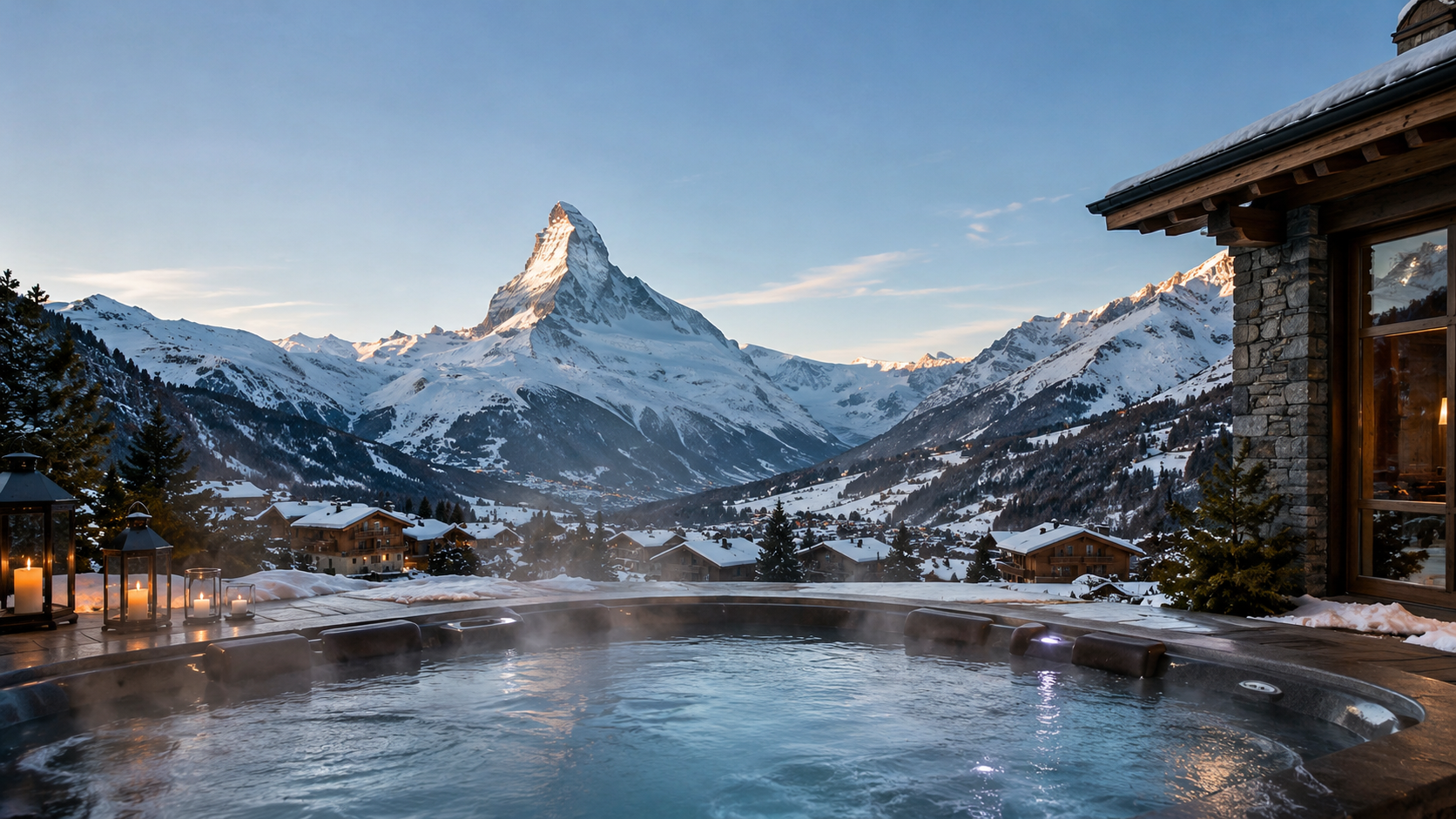 Luxury chalet in Zermatt with an outdoor jacuzzi overlooking the snow-covered Matterhorn in the Swiss Alps, illustrating Slow Luxury, alpine wellness, and regenerative escape.
In the Swiss Alps, Neuro-Luxury is reaching an entirely new level through a new generation of medical spas, longevity clinics, and ultra-premium wellness residences.
International references such as Clinique La Prairie in Montreux and Chenot Palace Weggis perfectly embody this new vision of regenerative luxury, combining:
-
preventive medicine,
-
cognitive recovery,
-
biohacking,
-
cryotherapy,
-
scientific wellness,
-
and longevity optimization within an ultra-exclusive alpine environment.
In a more lifestyle-oriented ultra-luxury segment, The Alpina Gstaad and its Six Senses Spa also illustrate this new approach to emotional alpine wellness, blending:
-
silence,
-
soothing architecture,
-
mental recovery,
-
and a regenerative art de vivre in the heart of the Swiss Alps.
Between wellness, longevity, and Slow Luxury, UHNW individuals are redefining in 2026 a new vision of international luxury centered on emotional well-being, quality of life, and regenerative investments.
Read the Full Article on Luxury World For You
The growing success of ultra-premium chalets such as The Lodge Chalet Grace in Zermatt perfectly illustrates the rise of Neuro-Luxury in the Swiss Alps, where emotional architecture, neurological calm, and regenerative wellness are reshaping contemporary luxury.
Discover the Regenerative Alpine Luxury Experience at Luxury Designer Chalet Grace
Koh Samui: Tropical Neuro-Luxury
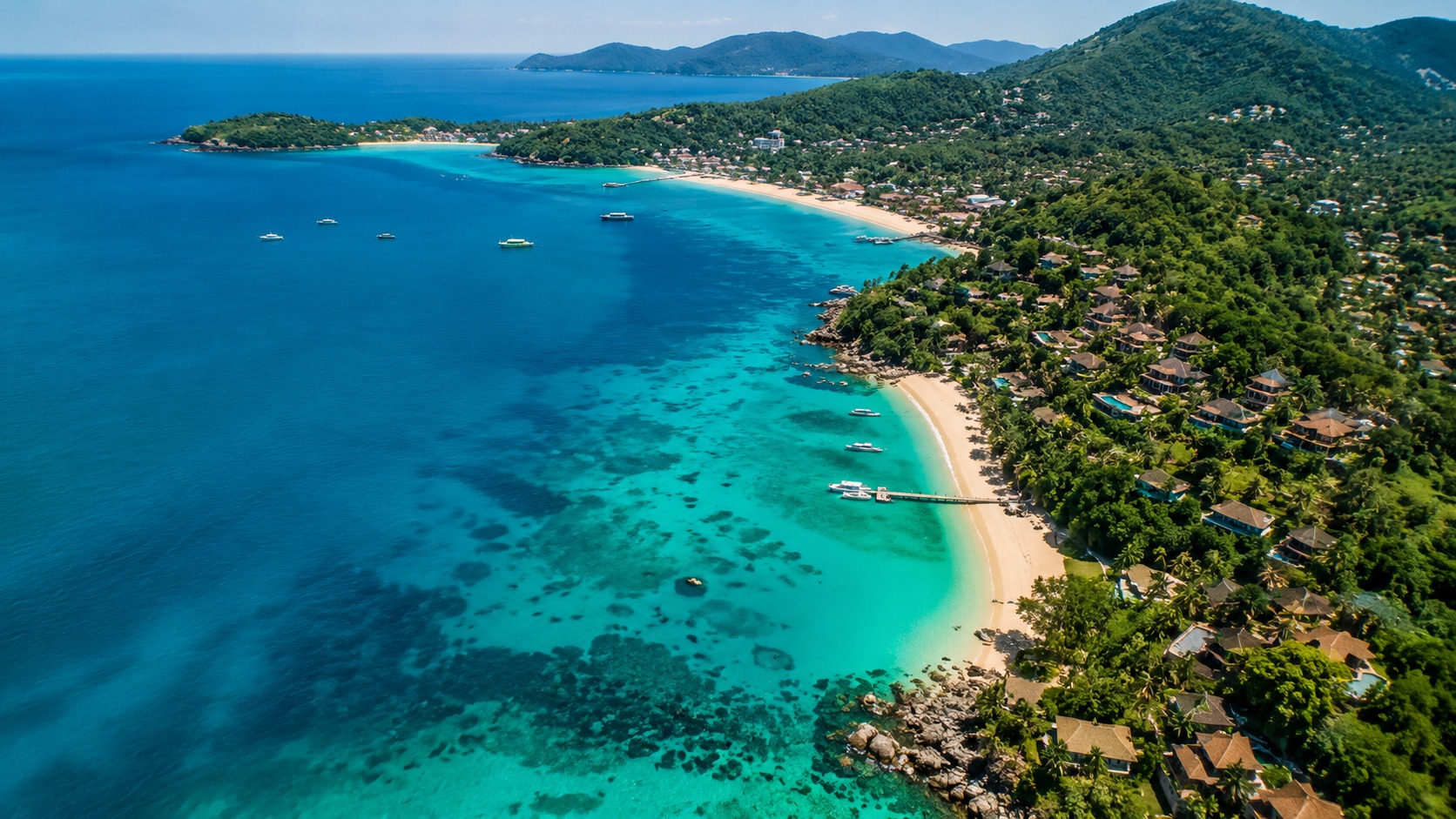 Aerial view of Koh Samui in Thailand featuring white-sand beaches, turquoise lagoons, tropical villas, and lush nature, illustrating Slow Luxury and regenerative wellness escape.
Between tropical jungle, preserved beaches, and villas opening onto the Gulf of Thailand, Koh Samui is now emerging as one of Asia’s leading destinations for Neuro-Luxury and regenerative wellness living.
The island attracts an international UHNW clientele seeking:
-
emotional balance,
-
digital disconnection,
-
holistic wellness,
-
longevity,
-
and a more peaceful tropical art de vivre.
This evolution of luxury is reflected in the rise of ultra-premium villas and resorts specifically designed to encourage:
-
mental recovery,
-
emotional harmony,
-
connection with nature,
-
and deeply regenerative residential experiences.
Iconic references such as Samujana Villas perfectly embody this new generation of Neuro-Luxury properties, blending:
-
panoramic infinity pools,
-
minimalist tropical architecture,
-
private wellness spaces,
-
and environments intentionally designed for emotional recovery and the Slow Luxury lifestyle.
The island is also home to world-renowned wellness sanctuaries such as Kamalaya Wellness Sanctuary, internationally recognized for programs focused on:
-
stress management,
-
longevity,
-
emotional detox,
-
sleep optimization,
-
and mental well-being enhancement within an ultra-soothing tropical environment.
In this new vision of international luxury, Koh Samui no longer simply sells villas or resorts.
The island offers a true experience of neurological and emotional regeneration.
Explore Our Collection of Villas in Koh Samui
-
Ultra-premium sea-view villa in Chaweng Noi, Koh Samui
-
The ultimate tropical luxury experience facing the legendary sunsets of Koh Samui: an exceptional oceanfront villa
FAQ — Neuro-Luxury & Slow Luxury
What is Neuro-Luxury?
Neuro-Luxury represents a new generation of luxury centered on neurological, emotional, and cognitive well-being. Unlike traditional luxury focused primarily on visible status or material exclusivity, Neuro-Luxury prioritizes environments specifically designed to improve mental recovery, emotional balance, and overall quality of life.
This emerging luxury philosophy combines:
-
emotional architecture,
-
wellness,
-
neuroscience,
-
natural light,
-
silence,
-
biophilic design,
-
and regenerative living environments
to sustainably enhance:
-
sleep quality,
-
cognitive recovery,
-
stress management,
-
emotional well-being,
-
and long-term health optimization.
In the Neuro-Luxury era, luxury is no longer defined only by ownership, but by how spaces, destinations, and experiences positively influence the human nervous system.
What is the difference between Slow Luxury and Neuro-Luxury?
Slow Luxury is primarily based on a philosophy of time, calmness, exclusivity, intentional living, and emotional experiences. It promotes a more conscious and less hyper-connected lifestyle centered on privacy, authenticity, and quality over excess.
Neuro-Luxury can be seen as the scientific evolution of Slow Luxury.
It integrates:
-
neuroscience,
-
cognitive wellness,
-
emotional architecture,
-
regenerative hospitality,
-
and neurological optimization of spaces and environments.
While Slow Luxury redefines the way people experience luxury lifestyles, Neuro-Luxury goes further by seeking to directly influence the brain, emotions, stress levels, and human recovery processes.
This new approach explains why luxury wellness destinations, regenerative resorts, and emotionally designed residences are becoming increasingly attractive to UHNW individuals worldwide.
Why are UHNW investors interested in Neuro-Luxury?
UHNW investors increasingly seek more than prestige properties or trophy assets. They are now looking for environments capable of improving emotional well-being, reducing stress, and supporting longevity.
Today’s high-net-worth buyers prioritize:
-
anti-stress environments,
-
wellness-oriented properties,
-
emotional security,
-
privacy and low-density living,
-
spaces designed for mental recovery,
-
and a more regenerative quality of life.
In a world dominated by hyperconnectivity, digital overload, and permanent cognitive stimulation, silence, calmness, and emotional balance are becoming rare luxury assets.
This evolution is also transforming investment strategies in ultra-prime real estate, where wellness-focused properties increasingly benefit from stronger long-term desirability and international demand.
What are the leading Neuro-Luxury destinations?
Several destinations worldwide are now strongly associated with Neuro-Luxury and the Slow Luxury lifestyle.
Among the most prestigious references:
-
Comporta and Melides in Portugal for emotional luxury and connection with nature
-
Mauritius for regenerative golf resorts and tropical Slow Luxury living
-
Swiss Alps for cognitive recovery, longevity clinics, and alpine wellness
-
Koh Samui for holistic wellness and emotional detox retreats
-
Bali for spiritual wellness and regenerative hospitality experiences
These destinations share common characteristics:
-
low-density environments,
-
preserved nature,
-
wellness ecosystems,
-
emotional security,
-
privacy,
-
and regenerative quality of life.
They increasingly attract international UHNW individuals searching for meaningful luxury experiences and long-term emotional well-being.
How is Neuro-Luxury transforming high-end real estate?
Neuro-Luxury Real Estate is reshaping ultra-prime property markets worldwide through a more human-centered and wellness-oriented approach to architecture and lifestyle design.
This transformation includes:
-
biophilic architecture,
-
circadian lighting systems,
-
anti-stress open spaces,
-
integrated wellness facilities,
-
sleep-enhancing technologies,
-
natural materials,
-
and environments designed to support cognitive and emotional recovery.
Luxury residences are no longer perceived solely as financial assets or prestige symbols.
They are becoming true spaces of neurological regeneration, emotional comfort, and long-term well-being.
This new approach is particularly visible in luxury villas, wellness resorts, golf estates, and branded residences focused on wellness and longevity.
Why is golf associated with Slow Luxury and Neuro-Luxury?
Private golf is increasingly perceived as much more than an exclusive leisure activity.
Within the Neuro-Luxury and Slow Luxury movement, golf represents:
-
mental disconnection,
-
emotional balance,
-
longevity,
-
slow living,
-
networking opportunities,
-
and connection with nature.
Modern ultra-premium golf resorts integrate wellness, low-density living, privacy, and regenerative experiences into their residential ecosystems.
Destinations such as Mauritius or the Algarve perfectly embody this evolution of luxury golf real estate, where lifestyle, wellness, and investment potential converge.
What are some iconic examples of Neuro-Luxury real estate?
Several ultra-premium properties and resorts now perfectly illustrate the rise of emotional and regenerative luxury real estate.
Among the most representative examples:
-
Samujana Villas in Koh Samui, known for tropical minimalist architecture and wellness-oriented design
-
Anahita Golf & Spa Resort in Mauritius, combining golf, wellness, and regenerative living
-
The exclusive villas of Comporta–Melides, blending emotional luxury with preserved natural landscapes
-
Swiss Alpine wellness chalets and longevity retreats focused on silence and cognitive recovery
These projects demonstrate how luxury real estate is evolving toward emotional well-being, neurological calmness, and regenerative lifestyle experiences.
Is Neuro-Luxury a long-term trend?
Yes. Neuro-Luxury is considered one of the most important long-term transformations currently reshaping international luxury and ultra-prime real estate.
This evolution is driven by major global trends such as:
-
wellness,
-
longevity,
-
mental health awareness,
-
emotional well-being,
-
regenerative hospitality,
-
and the increasing need for emotional and digital disconnection.
As UHNW lifestyles continue to evolve, luxury is progressively moving away from visible excess toward experiences and environments capable of improving physical, emotional, and cognitive well-being.
Neuro-Luxury is therefore not simply a temporary trend, but a structural evolution of contemporary luxury and high-end living.
Conclusion
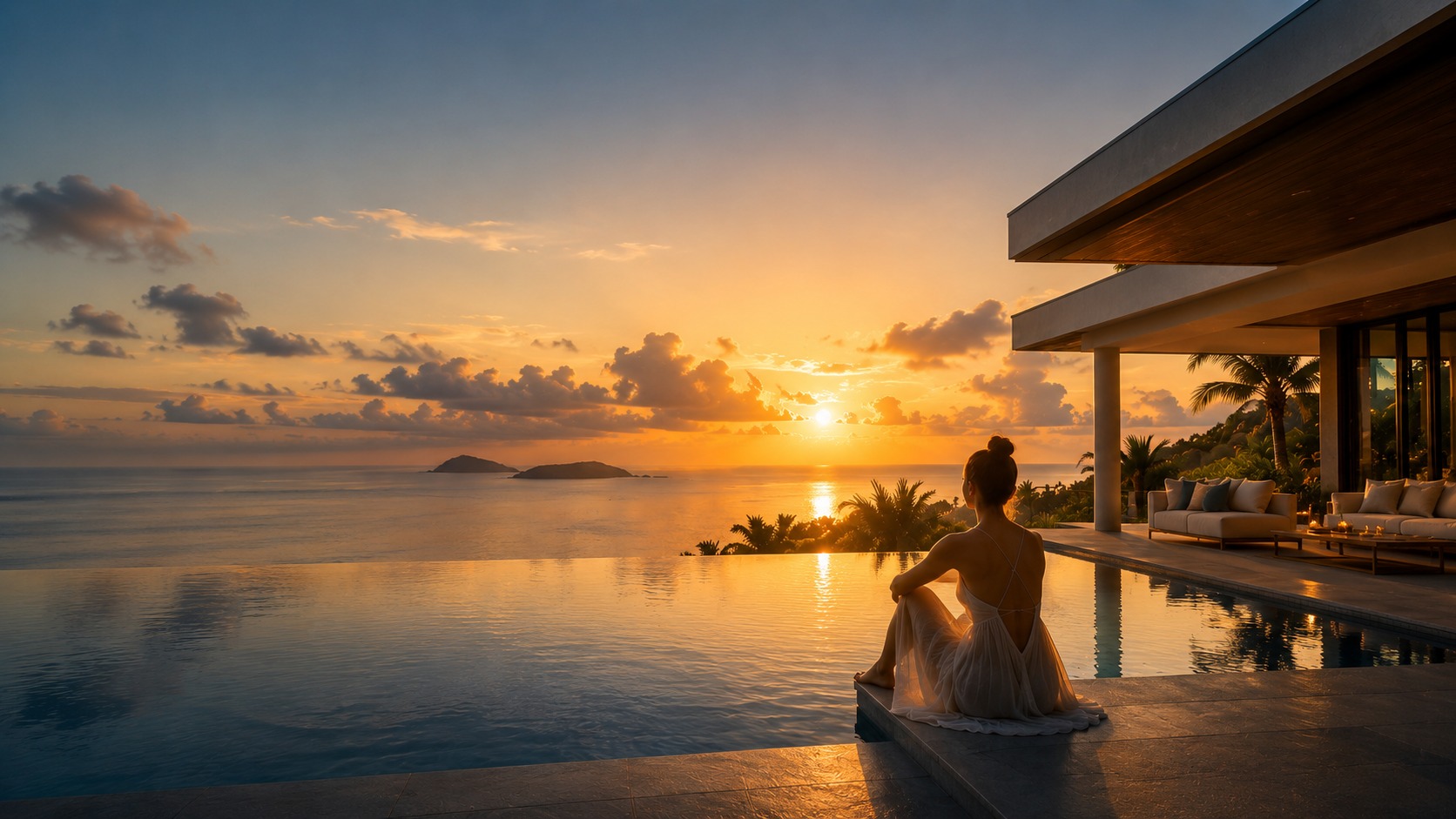 Woman contemplating the sunset from a contemporary villa with an infinity pool overlooking the ocean, illustrating Neuro-Luxury, Slow Luxury, and emotional well-being.
Neuro-Luxury is opening a new era of contemporary luxury.
In response to hyperconnectivity, permanent stress, and sensory overload, UHNW investors increasingly prioritize destinations and properties capable of offering:
-
calmness,
-
natural light,
-
space,
-
mental recovery,
-
and sustainable quality of life.
From Comporta to Mauritius, from the Swiss Alps to Koh Samui, a new generation of properties and destinations is redefining the codes of Slow Luxury, wellness, and ultra-prime real estate.
Prestige is no longer defined solely by what one owns.
It is increasingly measured by the ability of an environment to preserve:
-
energy,
-
well-being,
-
emotional balance,
-
and human resilience.
Within this new vision of luxury, silence, time, serenity, and emotional regeneration are becoming the true rare assets of the 21st century.
Explore our exclusive insights on Neuro-Luxury, Slow Luxury, wellness real estate, and international ultra-prime property trends on Luxury World For You.


