
Neuro-Luxury: Why Emotion Is Luxury’s New Scarcity

Neuro-Luxury explores how luxury is being transformed as emotion and memory become increasingly important across high-end hospitality and luxury real estate. Drawing on more than 25 years of experience in the luxury sector and memorable moments shared with clients, I have gradually shaped these observations into a concept. In the age of artificial intelligence—when information, personalization and even perfection are becoming increasingly accessible—what surprises us, moves us and remains in our memory may become luxury’s new scarcity. By Irina Terechina — Neuro-Luxury by Luxury World For You
As artificial intelligence makes information, images and personalization increasingly abundant, luxury may be entering a new era—one in which genuine emotion, meaningful experience and the ability to feel truly alive become the rarest privileges of all.
What Is Neuro-Luxury—and Why Is Emotion at Its Core?
At Luxury World For You, we define Neuro-Luxury as the exploration of how emotion, memory, perception and the brain shape our experience of luxury—and why certain places, objects and moments make us feel more intensely alive.
Neuro-Luxury sits at the intersection of luxury psychology, neuroscience, neuroaesthetics, emotional architecture, experiential luxury, hospitality, art, design and luxury real estate.
Yet its central pillar is emotion.
This relationship between emotion, memory, well-being and exceptional places is explored further in “Neuro-Luxury: How Emotional Engineering Is Redefining Slow Luxury & Ultra-Prime Real Estate.”
It is not simply about using neuroscience to sell luxury more effectively. Nor should it be reduced to sensory stimulation, wellness technology or the optimization of living environments.
These dimensions matter, but they represent only part of a more profound question:
Why do certain places, objects and experiences affect us deeply, remain in our memory and make us feel more alive—while others, despite their perfection, leave us emotionally untouched?
For centuries, luxury was defined by scarcity.
Rare stones. Precious materials. Exceptional craftsmanship. Limited access. Time-intensive creation. Objects that only a small number of people could possess.
But what happens when abundance begins to replace scarcity?
Artificial intelligence can now produce images in seconds, anticipate preferences, generate recommendations and create increasingly sophisticated forms of personalization. Information that once required expertise, privileged access or years of research is becoming instantly available.
Even beauty is becoming easier to reproduce.
In this new environment, the value of luxury may no longer depend only on what is difficult to manufacture or expensive to acquire. It may increasingly depend on something technology cannot guarantee:
A genuine human emotion.
Because without emotion, luxury may still impress us.
But does it make us feel alive?
From Material Scarcity to Emotional Scarcity
Luxury has traditionally been built around limited availability.
A rare watch, an exceptional diamond, a historic château or a privately commissioned work of art derives part of its value from the fact that it cannot easily be reproduced.
Scarcity creates desire.
Yet digital technology is transforming the meaning of rarity. Images circulate instantly. Global collections can be explored from a screen. Artificial intelligence can generate seemingly unique visual worlds, personalized itineraries, architectural concepts and marketing narratives at extraordinary speed.
What was once inaccessible is becoming visible.
What was once slow is becoming immediate.
What was once reserved for experts is becoming available to almost everyone.
This does not mean that craftsmanship, heritage or material rarity are losing their value. On the contrary, true expertise and authenticity may become even more important in a world of imitation.
But another form of scarcity is emerging alongside them: emotional scarcity.
Attention is fragmented. Experiences are documented before they are fully lived. Images are consumed and forgotten within seconds. Personalization is everywhere, yet much of it feels strangely impersonal.
In a world saturated with stimuli, the ability to experience something deeply may become rare in itself.
Luxury Has Always Been Emotional
Luxury has never been entirely rational.
We may justify a purchase through provenance, location, craftsmanship, investment potential or architectural significance. But behind many luxury decisions lies a more intimate impulse.
Desire.
Recognition.
Belonging.
Projection.
Memory.
The feeling of becoming, even briefly, a different version of ourselves.
This is particularly visible in luxury real estate. A buyer may arrive with a detailed list of requirements: surface area, number of bedrooms, location, security, view and potential return on investment.
Then they enter a property.
Their pace changes. Their expression softens. They move towards a window or remain silent in a particular room. Something has happened before they can explain it.
We call it “falling in love” with a property.
The expression is revealing. We rarely speak about falling into reason.
When the Decision Begins Before the Explanation
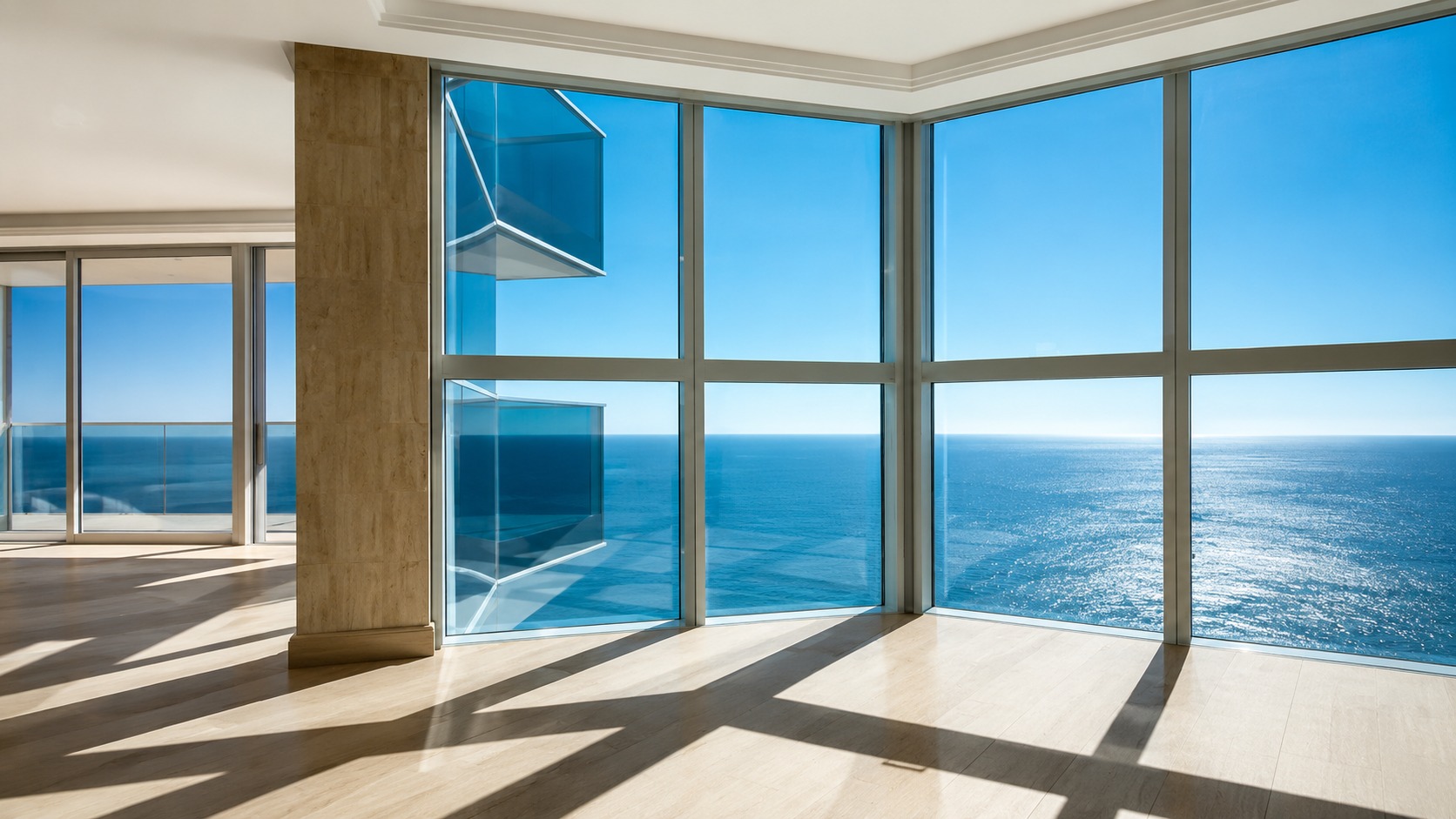 This does not mean that the brain and the heart operate as opposing systems. Emotion, perception, memory, intuition and conscious reasoning are deeply interconnected.
A space can affect us through natural light, proportions, acoustics, materials, scent, temperature, silence and our own personal associations. We may respond before consciously identifying every element shaping that reaction.
Only afterwards do we begin constructing an explanation.
This is why two properties with comparable specifications can provoke entirely different responses. One may be objectively flawless yet emotionally distant. Another may be imperfect on paper but impossible to forget.
In luxury, measurable value matters.
But emotional value often determines whether something becomes meaningful.
This frontier between perception, desire, emotion and decision-making is explored further in “Neuro-Luxury: Does Falling in Love With a Property Come Before Reason?”.
Beyond Wellness and Sensory Design
In much of the English-speaking world, the emerging language surrounding Neuro-Luxury is frequently associated with wellness, neuroarchitecture, sensory design and nervous-system regulation.
These fields offer valuable insights. Light, nature, sound, spatial organization and materiality can influence comfort, attention and emotional well-being.
But Neuro-Luxury can extend further.
It can help us examine not only whether an environment makes us feel calm, but whether it awakens curiosity, desire, wonder, attachment or a lasting sense of meaning.
This relationship between time, silence, nature and emotional well-being is explored in “Neuro-Luxury & Slow Luxury: The Emotional Engineering of the New Luxury”.
Calm matters.
But so do surprise, fascination, joy and the sudden feeling that a place somehow belongs to our personal story.
The question is not merely:
“Does this make me feel better?”
It is also:
“Does this make me feel more alive?”
Why Feeling Alive May Be the Ultimate Luxury
Modern life offers unprecedented convenience, but convenience does not always produce emotional intensity.
Algorithms reduce uncertainty. Platforms anticipate our choices. Digital systems eliminate friction. Artificial intelligence increasingly predicts what we may want before we have consciously formulated the desire ourselves.
This efficiency can be valuable.
Yet the experiences we remember most vividly are not necessarily the most efficient or perfectly controlled. They may contain surprise, discovery, vulnerability or even a small degree of unpredictability.
A journey into a remote landscape.
A dinner in a centuries-old château.
The first sight of an extraordinary work of art.
A conversation that unexpectedly changes our perspective.
A property that makes us forget the criteria we had carefully prepared.
A historic residence such as Château de Villette, a masterpiece of French elegance, illustrates this emotional dimension of luxury: architecture, history, atmosphere and the possibility of inhabiting a story rather than simply admiring a property.
Luxury at its most powerful does not merely remove inconvenience. It creates presence.
It makes time feel different.
It interrupts routine.
It gives emotional weight to a moment.
From Impressive to Unforgettable
The luxury industry has become exceptionally skilled at producing visual perfection.
Hotels are beautifully staged. Residences offer remarkable finishes. Brands deliver increasingly seamless service. Digital imagery presents idealized versions of almost every destination, object and experience.
But perfection can become standardized.
Once the codes of perfection are known, they can be copied.
The same marble, lighting, neutral palette, signature scent and carefully rehearsed service rituals can appear across multiple cities and continents.
The result may be technically flawless but emotionally interchangeable.
Emotion creates differentiation because it cannot be reduced to a checklist.
It emerges from the relationship between a person, a place and a particular moment. This relationship is difficult to manufacture—and impossible to reproduce in exactly the same way.
The more perfection becomes reproducible, the more the irreplaceable gains value.
Emotion, Memory and the Value of Luxury
A luxury experience does not end when the guest leaves the hotel, the collector walks away from an exhibition or the buyer completes a property visit.
Its value continues through memory.
We do not remember every expensive room in which we have stayed. We do not remain attached to every beautiful object we have seen. We remember the experiences that generated an emotional imprint.
This is where Neuro-Luxury becomes particularly relevant.
Emotion helps transform exposure into memory.
Memory transforms an experience into part of our personal narrative.
And personal narrative creates attachment.
Why Some Places Stay With Us
After more than 25 years in luxury real estate, I have observed that the properties clients remember are not always the largest, the most expensive or the most visibly prestigious.
They are often the places where something emotionally significant occurred.
I once accompanied a billionaire client through Paris. Despite having access to almost every form of private transportation, he became unexpectedly delighted by the idea of taking the Métro for two stops.
Objectively, it was the least luxurious moment of his visit.
Emotionally, it may have been one of the most memorable.
Its value came from contrast, spontaneity and the pleasure of experiencing something outside his usual reality.
More than 20 years later, he still tells this story to his friends as one of the exceptional experiences of his life.
This illustrates a fundamental transformation in contemporary luxury:
The rarest experience is not always the one that costs the most.
Sometimes, it is the one that allows us to feel something unexpected.
A Night Without Almost Any Electricity
 I understood this long before giving it a name.
Several years ago, I travelled through Uruguay with clients. We stayed in beautiful hotels and discovered exceptional places. Yet one night remains surprisingly vivid in our memories.
It did not take place in a palace.
It was in Cabo Polonio, hidden behind immense dunes on Uruguay’s Atlantic coast and seemingly cut off from the rest of the world.
There was almost no electricity.
At one point, a young man had to pedal a generator simply to give us a little light.
Compared with the luxury surrounding the rest of our journey, the contrast was almost absurd.
Would I have wanted to remain there for an entire week?
Probably not.
But for one night?
Unforgettable.
Years later, my clients remembered it just as clearly as I did.
Perhaps the brain retained that night because, for a few hours, everything had changed: our pace, our expectations, our comfort, our relationship with time and even the quality of our attention.
It was not necessarily comfort that created the memory.
It was the rupture with what our minds considered normal.
Luxury Does Not Always Mean More Luxury
The experience of Cabo Polonio and the story of my client in the Paris Métro taught me something I now consider fundamental.
To create a memory, it is not always necessary to offer more. Sometimes, we need to take someone outside their everyday reality—even when that reality is already extraordinarily luxurious.
For someone accustomed to palaces, chauffeurs, exceptional properties and permanent service, adding even more comfort does not necessarily create more emotion.
The exceptional can also become routine.
By contrast, two stops on the Paris Métro may represent a complete rupture from that world.
A night with almost no electricity can remain more vivid than another five-star suite.
This does not mean that tomorrow’s luxury should be uncomfortable or that clients should be deprived of what they appreciate.
Comfort, beauty, service and excellence will remain fundamental.
But they may no longer be enough to create the unforgettable.
Emotional luxury may sometimes consist of creating a rupture with what the person already knows.
Surprising them.
Temporarily changing their frame of reference.
Introducing them to a world they would not have spontaneously chosen.
Creating a contrast strong enough to interrupt the automation of everyday life.
A memorable experience does not necessarily have to be more expensive, spectacular or perfect.
It must be different enough for the brain to decide to preserve it.
This may be one of the fundamental questions of Neuro-Luxury:
Not simply:
“What can this person afford?”
But:
“What do they never experience?”
Emotional Architecture and Luxury Real Estate
Luxury real estate is particularly well positioned to express this evolution because architecture is experienced through both the body and the mind.
A property is not simply observed. It is entered, crossed, touched, heard and inhabited.
Natural light may create a sense of expansion. A framed landscape may encourage contemplation. Historic materials may evoke continuity and permanence. Silence may offer relief from an overstimulated life.
At the same time, a staircase, a garden, a library or the scent of old wood may awaken highly personal memories.
This is why luxury real estate cannot be understood solely through price per square metre, technical specifications or market comparisons.
These elements establish rational value.
Emotion creates subjective value.
From Property to Personal Meaning
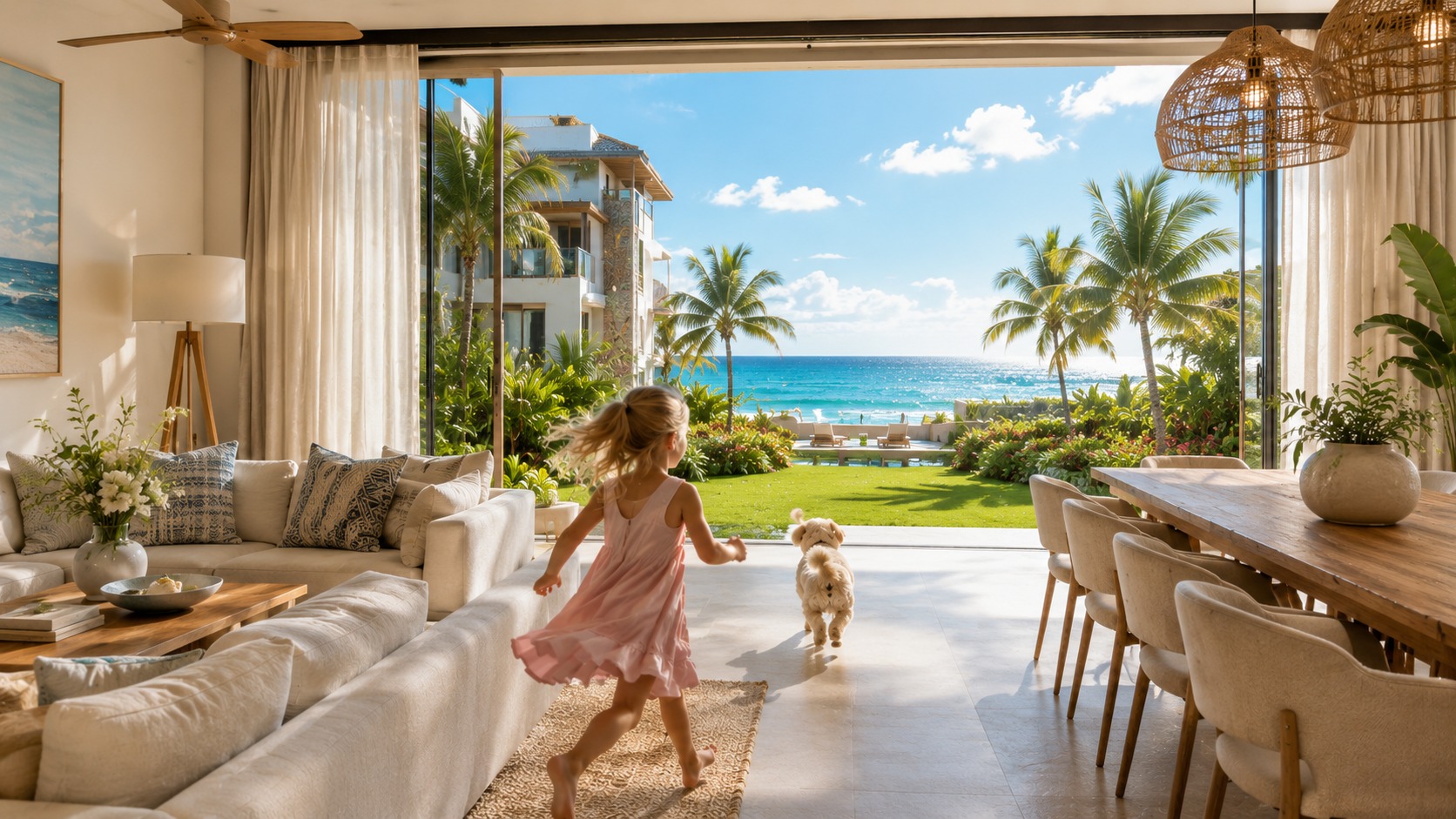 The future of luxury real estate may therefore depend less on the accumulation of features and more on emotional coherence.
Does the architecture create a relationship with its environment?
Does the property tell a story?
Does it offer privacy without emotional isolation?
Can the future owner imagine a life there rather than simply admire the design?
Does the experience remain distinctive once the initial spectacle has passed?
These questions matter because high-end buyers are exposed to an enormous number of exceptional properties. Beauty alone may no longer be sufficient to command attention.
A residence must increasingly offer something more difficult to quantify:
A sense of place.
A feeling of recognition.
An emotional reason to choose it.
A property becomes truly exceptional when, beyond its objective characteristics, it creates an emotional connection and remains in memory.
Why Luxury Hospitality Is Moving Towards Emotion
Luxury hospitality has often anticipated changes that later influence residential real estate.
This evolution is also visible in global investment patterns. According to JLL’s Global Hotel Investment Outlook 2026, direct hotel investment in 2025 increased by 22% from the 2023 trough, while hotels represented approximately 8% of global commercial real estate investment volumes—above their long-term average.
More revealingly, JLL identifies luxury resorts, trophy assets and distinctive experiential properties among the segments attracting investor interest. Capital is not moving towards hospitality simply because it offers rooms and services. It is increasingly drawn to assets with identity, scarcity and an experience that cannot easily be reproduced.
This may be no coincidence.
Investors are not only looking for square metres, yield or brand recognition. The uniqueness of an asset—and its ability to generate an experience that remains difficult to replicate—is also becoming a source of value.
For years, luxury hotels established the aesthetic standards that private homes sought to emulate: refined materials, sophisticated lighting, exceptional bedding and flawless service.
Then expectations evolved.
Clients no longer wanted their homes merely to resemble palace suites. They wanted to live with the services of a five-star hotel: concierge assistance, housekeeping, wellness facilities, security, private dining and effortless daily management.
Residences such as the prestigious duplex residence at Tour Odéon in Monaco embody this evolution, bringing privacy, security, exceptional design and five-star hospitality services into private residential life.
With Mareterra, the relationship between architecture, the Mediterranean and residential experience enters another dimension. The luxury seafront apartment at Le Renzo, Mareterra offers a concrete expression of this new vision of luxury living.
This broader transformation of the Monegasque market is examined in “Monaco Luxury Real Estate: Prices and Investment in 2026”.
Today, however, another shift is taking place.
The most distinctive hotels and residences are no longer competing only through amenities. They are creating emotional identities.
A guest may remember the silence of a desert lodge, the atmosphere of a historic estate, the view from a remote coastal retreat or a dinner staged in a location that felt almost impossible to access.
Hospitality becomes memorable when it moves beyond service delivery and creates an emotional narrative.
Emotion as Protection Against Standardization
Standardization offers consistency, but excessive consistency can weaken memory.
If every hotel offers a similar palette, service sequence and visual language, the experience becomes predictable. Luxury then risks becoming a technically excellent but emotionally neutral product.
Emotion protects against this form of standardization.
It allows a destination, residence or hotel to become culturally and personally specific. It replaces generic perfection with character.
The last Templar château on the French Riviera belongs precisely to this category of emotionally distinctive assets. Its history, architecture, atmosphere and sense of mystery cannot be standardized—or recreated elsewhere in exactly the same form.
This renewed attraction to historic estates is explored in The 21st-Century Château: From Historic Estate to Regenerative Luxury Investment
The strongest luxury hospitality concepts increasingly understand that guests are not simply purchasing a room.
They are purchasing the possibility of a story worth remembering.
The Personal Nature of Emotional Luxury
What feels extraordinary to one person may be part of another person’s everyday life.
Some seek energy, connectivity, cultural stimulation and Mediterranean sociability. Others are drawn to silence, nature, space, privacy and a slower relationship with time.
This diversity becomes especially visible when comparing two very different luxury destinations, as explored in Mauritius or Marbella: Where to Invest in Luxury Real Estate in 2026?
A contemporary luxury villa in Marbella may embody Mediterranean energy, modern architecture, social life and proximity to internationally renowned destinations.
By contrast, a prestigious villa in Mauritius may answer a very different emotional need: tropical nature, space, intimacy, disconnection and a slower pace of life.
The question is not which represents the “better” form of luxury.
The real question is:
Which one will make the person experiencing it feel something?
True personalization may therefore no longer consist merely of knowing what a client already likes.
It also requires understanding what may be missing from their life, what can still surprise them—and what they never normally experience.
Traditional personalization gives clients more of what they already know they enjoy.
Neuro-Luxury also seeks to reveal what they may never have thought to request—but might never forget.
Can Artificial Intelligence Create Emotion?
 Artificial intelligence can already produce beautiful images, compose music, recommend products, assist with architectural concepts and anticipate consumer preferences.
It will undoubtedly become an increasingly important tool across luxury, hospitality, art and real estate.
The speed of this transformation is no longer marginal. According to McKinsey’s State of AI survey, 71% of respondents said their organizations regularly used generative AI in at least one business function in 2024, compared with 65% earlier that year and only 33% in 2023.
These figures reveal how quickly generative AI has moved from experimentation into everyday professional life. For the luxury industry, the implications are considerable: technology can accelerate access to information, comparison, recommendation, personalization and creation.
When I began working in luxury real estate, information still arrived by fax. Today, artificial intelligence can search, compare, recommend and create within seconds. In just a few decades, information has moved from privileged access to almost unlimited abundance.
But this acceleration creates a paradox.
The more efficiently technology learns to reproduce the codes of perfection, the more valuable the genuinely irreplaceable may become.
The central question is therefore not whether AI can produce content that appears emotional.
It is whether technology can create the complex human conditions through which an experience becomes personally meaningful.
This question extends far beyond real estate. It is already reshaping the art world: can artificial intelligence create works that move us as deeply as human artists do?
Reproducing the visual codes of emotion is not necessarily the same as creating emotion itself.
Emotion is shaped by biography, memory, culture, context, expectation and relationships. The same object or place can generate fascination in one person and indifference in another.
AI may become highly effective at identifying patterns associated with preference and emotional response. It may help brands and designers understand how people react to particular environments.
Yet prediction is not the same as lived experience.
A system may anticipate that we will like something.
It cannot guarantee that the experience will move us.
The Value of the Unpredictable
As personalization becomes more automated, genuine surprise may acquire greater value.
If every recommendation perfectly reflects our previous choices, we may remain inside an increasingly comfortable but narrow version of ourselves.
Luxury can offer something different: access to what we did not yet know we desired.
A remarkable curator, advisor, hotelier or real estate professional does not simply confirm established preferences. They recognize the person behind the brief and introduce an element of discovery.
This is where human intuition remains essential.
The future of luxury may not be a competition between technology and humanity. It may depend on using technology to remove unnecessary friction while protecting the emotional unpredictability that makes an experience meaningful.
Artificial intelligence may become increasingly skilled at giving us what we already know we like.
Neuro-Luxury can help us discover what we did not yet know we could love.
From the Value of the Object to the Value of the Experience
The question traditionally associated with luxury has been:
“How much is it worth?”
The emerging question may be:
“How does it make me feel?”
These questions are not mutually exclusive.
Emotional value can reinforce financial value. A property with a powerful identity may attract stronger demand. A hotel capable of creating lasting memories may inspire loyalty and recommendation. A work of art with emotional resonance may hold a place in a collection that extends beyond its market price.
But emotional value should not be treated as a superficial marketing technique.
Emotion cannot simply be added at the end of a luxury strategy.
It must be considered from the beginning—in the architecture, storytelling, service, curation, environment and human relationships surrounding the experience.
Could Memory Become a New Measure of Luxury?
Luxury hospitality first influenced the way high-end residences were designed.
Then it influenced how they were operated and inhabited.
Today, it may be showing us how they will increasingly need to make us feel something.
The strongest experiences will not necessarily be those that accumulate the greatest number of services.
They may take the form of a historic château where architecture, time and atmosphere meet; a lodge in an almost inaccessible landscape; an unexpected private encounter; an experience that remains partly unknown—or even the temporary disappearance of comforts that wealth usually makes invisible.
This is not about seeking discomfort for its own sake.
It is about creating contrast, authenticity, surprise and emotional intensity.
From More Luxury to More Meaning
For the luxury industry, this evolution may represent an important strategic change.
The question could gradually shift from:
“How can we make this experience even more luxurious?”
to:
“How can we make it impossible to forget?”
And perhaps even:
“How can we take this person outside their usual reality for a few hours?”
Because everyday life is not the same for everyone.
And this may be where true luxury personalization begins.
The Future of Luxury Will Be Measured Differently
Tomorrow’s luxury will still involve rarity, craftsmanship, heritage, privacy and exceptional quality.
But these traditional markers may no longer be sufficient on their own.
As information becomes abundant, attention becomes scarce.
As images become effortless to generate, authenticity becomes scarce.
As personalization becomes automated, genuine understanding becomes scarce.
As perfection becomes reproducible, emotional resonance becomes scarce.
The future of luxury may therefore be defined not only by what is rare to own, but by what is rare to feel.
A moment of wonder.
A sense of belonging.
An unexpected discovery.
A memory that refuses to disappear.
The feeling of being fully present—and fully alive.
Conclusion: Emotion May Be Luxury’s Last Irreplaceable Asset
 Luxury has always reflected what society considers difficult to obtain.
Once, that meant rare materials, distant destinations and privileged access.
Today, in a world of abundance, acceleration and artificial intelligence, rarity is changing.
The next frontier of luxury may not be another object, feature or service. It may be the capacity to create experiences that reach beyond admiration and generate genuine human meaning.
Because without emotion, luxury can still be beautiful, perfect and expensive.
But only emotion can make it unforgettable.
And perhaps the ultimate luxury is no longer simply having more.
It is feeling more alive.
This vision is also expressed through the Luxury World For You collection—a selection of exceptional properties chosen not only for their rarity, architecture or location, but also for their ability to provoke emotion and leave a lasting impression.
Frequently Asked Questions About Neuro-Luxury
What Is Neuro-Luxury?
Neuro-Luxury explores how emotion, memory, perception, psychology and the brain influence the way people experience luxury. It examines why certain places, objects and moments create powerful attachment, desire and lasting memories—and make us feel more intensely alive.
Is Neuro-Luxury the Same as Wellness Luxury?
No. Wellness can be one application of Neuro-Luxury, particularly when architecture and experiences support calm, recovery and emotional well-being. Neuro-Luxury also encompasses wonder, desire, surprise, attachment, memory and the broader question of what makes people feel alive.
How Does Neuro-Luxury Apply to Real Estate?
In luxury real estate, Neuro-Luxury considers how architecture, natural light, spatial proportions, materials, landscape, silence and personal memories influence emotional connection and perceived value.
It helps explain why buyers may feel attached to one property while remaining indifferent to another with similar specifications.
Why Is Emotion Becoming a Form of Luxury?
Emotion is becoming more valuable because modern consumers live in an environment of digital abundance, constant stimulation and increasingly automated personalization.
Genuine emotional experiences remain difficult to predict, standardize and reproduce.
Can Artificial Intelligence Reproduce Emotional Luxury?
AI can analyze preferences, personalize experiences and generate emotionally suggestive content.
However, genuine emotional meaning also depends on individual memory, context, relationships and lived experience. Technology can support emotional luxury, but it cannot guarantee that someone will feel moved.
What Is Emotional Luxury?
Emotional luxury describes a form of luxury whose value comes not only from price, status or material rarity, but from the feelings, memories and personal meaning it creates.
It shifts the emphasis from what a person owns to what they experience, feel and remember.
What Is the Relationship Between Neuro-Luxury and Slow Luxury?
Slow Luxury values time, silence, nature, disconnection and a more conscious experience of luxury.
Neuro-Luxury goes further by examining how these experiences affect perception, attention, emotion and memory.
This is why a night almost cut off from the world may sometimes leave a stronger memory than a succession of five-star experiences.
Why Are Historic Properties Particularly Relevant to Neuro-Luxury?
Châteaux, historic residences and iconic properties possess something that is exceptionally difficult to reproduce: time.
Architecture, patina, history, stories, gardens and atmosphere create a singular identity. In a world where technology can rapidly reproduce aesthetic codes, this combination of history, physical rarity and emotion may become particularly valuable.
Could Memory Become a New Measure of Luxury?
This is one of the central hypotheses of Neuro-Luxury.
Luxury was historically associated with the rarity of objects, followed by excellence of service and personalization. As these elements become more accessible or reproducible, an experience’s capacity to remain in memory may become a new marker of value.
The question would no longer be only:
“Is it exceptional?”
But also:
“Will I remember it in 10 or 20 years?”
What Could Become Truly Rare in the Age of AI?
As information, images, recommendations and personalization become almost instantly accessible, scarcity changes.
Attention, time, surprise, authenticity, access to the irreplaceable—and above all memorable emotion—may become some of luxury’s new forms of rarity.
This is precisely the territory explored by Neuro-Luxury by Luxury World For You.
Explore More From Neuro-Luxury
Further perspectives and analyses explore how emotion, memory, artificial intelligence, architecture and personal experience are reshaping our perception of luxury:
 [**Neuro-Luxury: How Emotional Engineering Is Redefining Slow Luxury & Ultra-Prime Real Estate**](Neuro-Luxury: How Emotional Engineering Is Redefining Slow Luxury & Ultra-Prime Real Estate)

 [**Artificial Intelligence and Art: Can AI Create Art That Moves Us as Deeply as Human Artists Do?**](https://luxuryworld-foryou.com/en/blog/artificial-intelligence-art-ai-human-emotion)
-
Neuro-Luxury: Does Falling in Love With a Property Come Before Reason?
-
The 21st-Century Château: From Historic Estate to Regenerative Luxury Investment
-
Mauritius or Marbella: Where to Invest in Luxury Real Estate in 2026?
Sources and References
-
JLL — Global Hotel Investment Outlook 2026
Global hotel investment volumes, hospitality’s share of commercial real estate investment and growing interest in luxury resorts, trophy assets and experiential properties.McKinsey & Company — The State of AI
Global adoption of artificial intelligence and the rapid expansion of generative AI across business functions.


