
Can Art Save the World? Neuro-Luxury and the Power of Emotion

Can art transform the way we feel? Through the works of Zao Wou-Ki, Wang Keping, Jean Duquoc and Corol, discover the emotional power of contemporary art. At the intersection of neuroscience, well-being and the art market, Neuro-Luxury redefines modern luxury — where true wealth lies not simply in what we own, but in how deeply beauty moves us.
From Zao Wou-Ki's meditative blues to Jean Duquoc's vibrant landscapes, four artists reveal a dimension of contemporary art that financial markets cannot fully measure: its power to transform how we feel.
Paris, October 2026
How much is a moment of serenity worth in a world that seems to have lost its balance?
The global art market can assign a price to a painting. Collectors can analyze its provenance, rarity and investment potential. Auction houses can measure its performance.
But none of these metrics can explain why a particular artwork stops us in our tracks, awakens a forgotten memory or makes us feel unexpectedly at peace.
At a time of geopolitical uncertainty, economic volatility and relentless digital stimulation, that distinction deserves attention.
What if art's most valuable asset were not simply its scarcity, but its emotional impact?
I began asking myself that question during a recent visit to a Parisian art gallery.
I had come to discover a few artists. Instead, I found myself returning repeatedly to a small blue painting by Zao Wou-Ki.
It was neither the largest nor the most spectacular work in the room.
Yet something about it made the surrounding world fall silent.
That encounter led me to reconsider a subject I have been exploring through Neuro-Luxury: the relationship between art, sensory perception, emotional well-being and our evolving definition of luxury.
Four artists, in particular, helped shape that reflection.
Zao Wou-Ki: The Unexpected Luxury of Silence
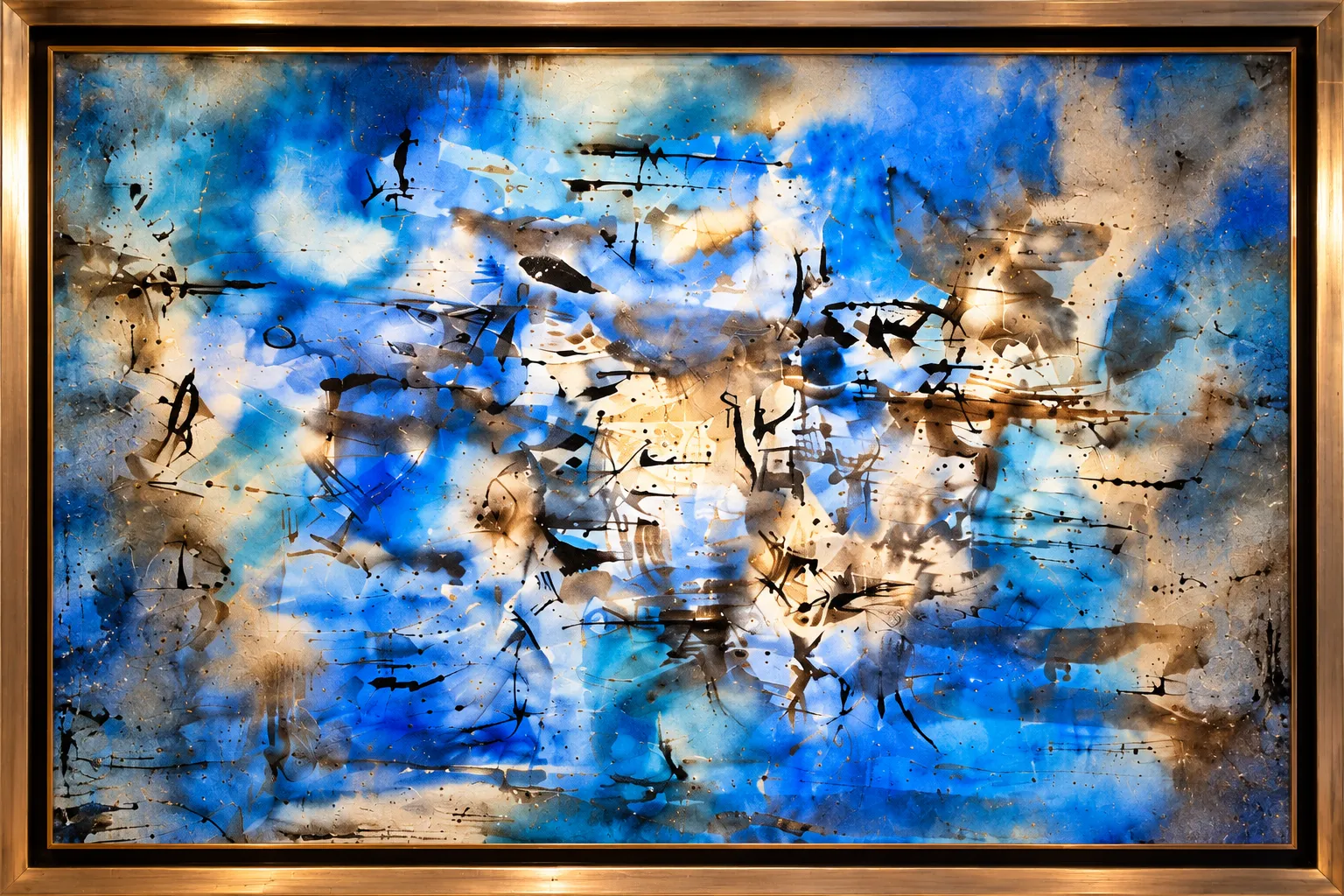 Some artworks attract our attention. Others seem to hold it against our will.
Zao Wou-Ki's Untitled (1954), a small composition in Indian ink and watercolor, measuring just 32.5 × 40.5 cm, belonged to the second category.
Its deep blues, delicate golden accents and mysterious calligraphic signs seemed to create their own atmosphere.
I walked away. Then returned.
And returned again.
Born in 1920 and established in Paris from 1948, Zao Wou-Ki developed a distinctive artistic language combining Chinese cultural traditions with Western abstraction.
During the 1950s, his paintings moved increasingly towards imaginary signs, fluid compositions and expressive spaces.
Yet standing before this work, I was not thinking about art history.
I was experiencing something much simpler.
Serenity.
The painting offered no recognizable landscape, no clear narrative and no intellectual explanation for its effect.
It simply invited me to slow down.
In an era when attention is constantly fragmented, perhaps that is a luxury in itself.
An artwork's value may begin with its authenticity and rarity, but its emotional significance belongs entirely to the person looking at it.
Explore Zao Wou-Ki, Untitled (1954)
This perspective connects with our analysis of Neuro-Luxury and the emotional evolution of Slow Luxury.
Wang Keping: When Material Becomes Emotion
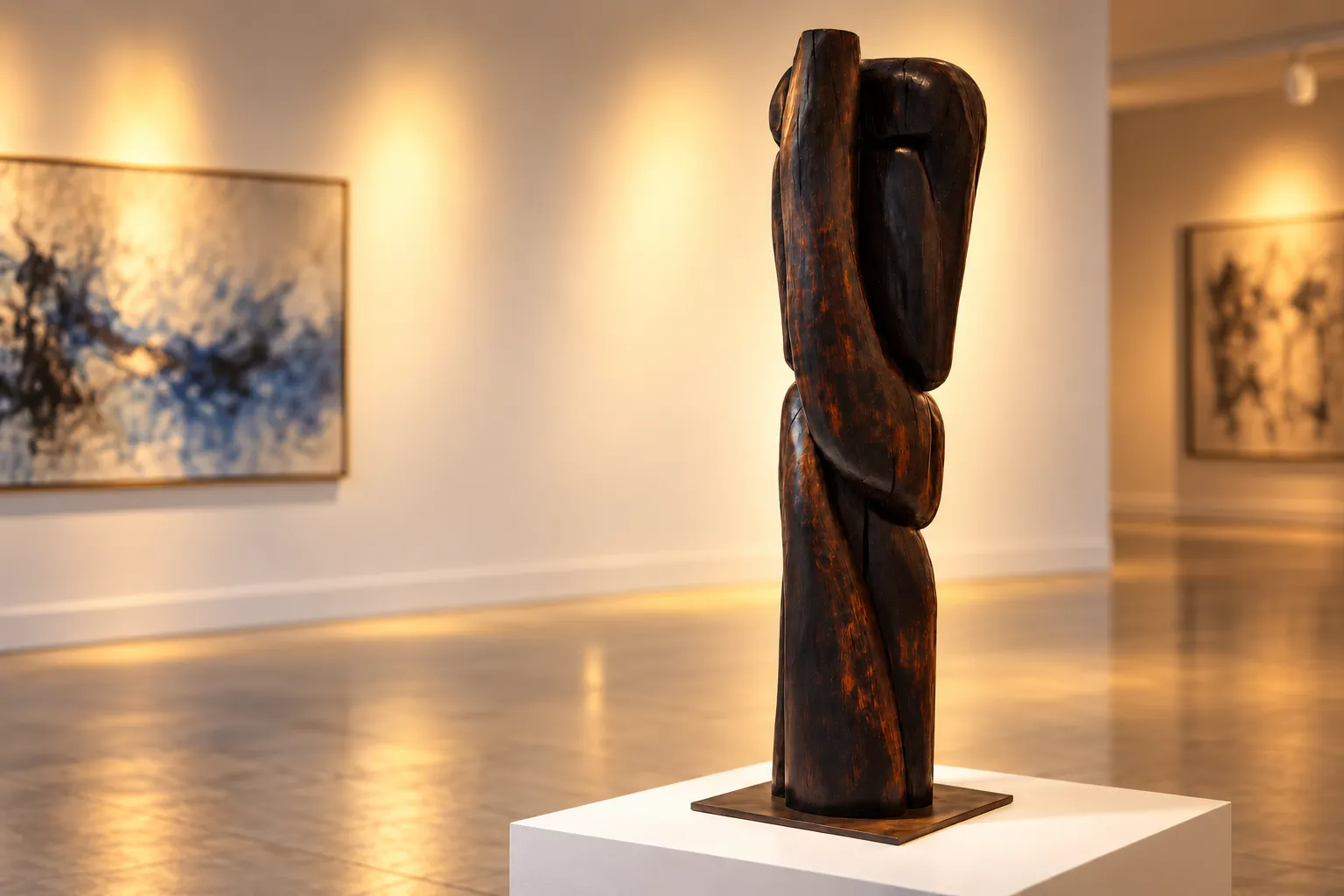 If Zao Wou-Ki awakened contemplation, Wang Keping's sculptures inspired something almost physical.
I wanted to touch them.
Their generous curves, polished surfaces and organic forms suggested warmth, softness and an unexpected sensuality.
Born in Beijing in 1949, Wang Keping helped establish the avant-garde Stars movement in 1979 before settling in France in 1984.
His artistic approach is particularly fascinating because he works with the natural character of wood rather than simply imposing a predetermined form upon it.
Knots, grain and imperfections become part of the composition.
The material retains something of its original life.
His work, presented internationally and celebrated at the Musée Rodin in 2022, demonstrates how sculpture can engage more than our visual perception.
For the luxury industry, this raises an interesting question.
We place enormous importance on exceptional materials: rare marble, precious wood, fine leather and extraordinary craftsmanship.
But what makes these materials truly desirable?
Their price? Their rarity? Or the sensations and associations they awaken?
Wang Keping suggests that the answer may involve all three.
Luxury is not only about the quality of what we possess. It is also about the quality of what we experience.
Discover a Wang Keping sculpture
Jean Duquoc: The Emotional Economics of Color
 My most unexpected artistic discovery took place nearly 9,000 kilometers from Brittany.
Last summer, I spent ten days in California visiting my friend Margo, determined to disconnect from work and embrace the philosophy of Slow Luxury.
I knew her elegant, minimalist home well.
But this time, something had changed.
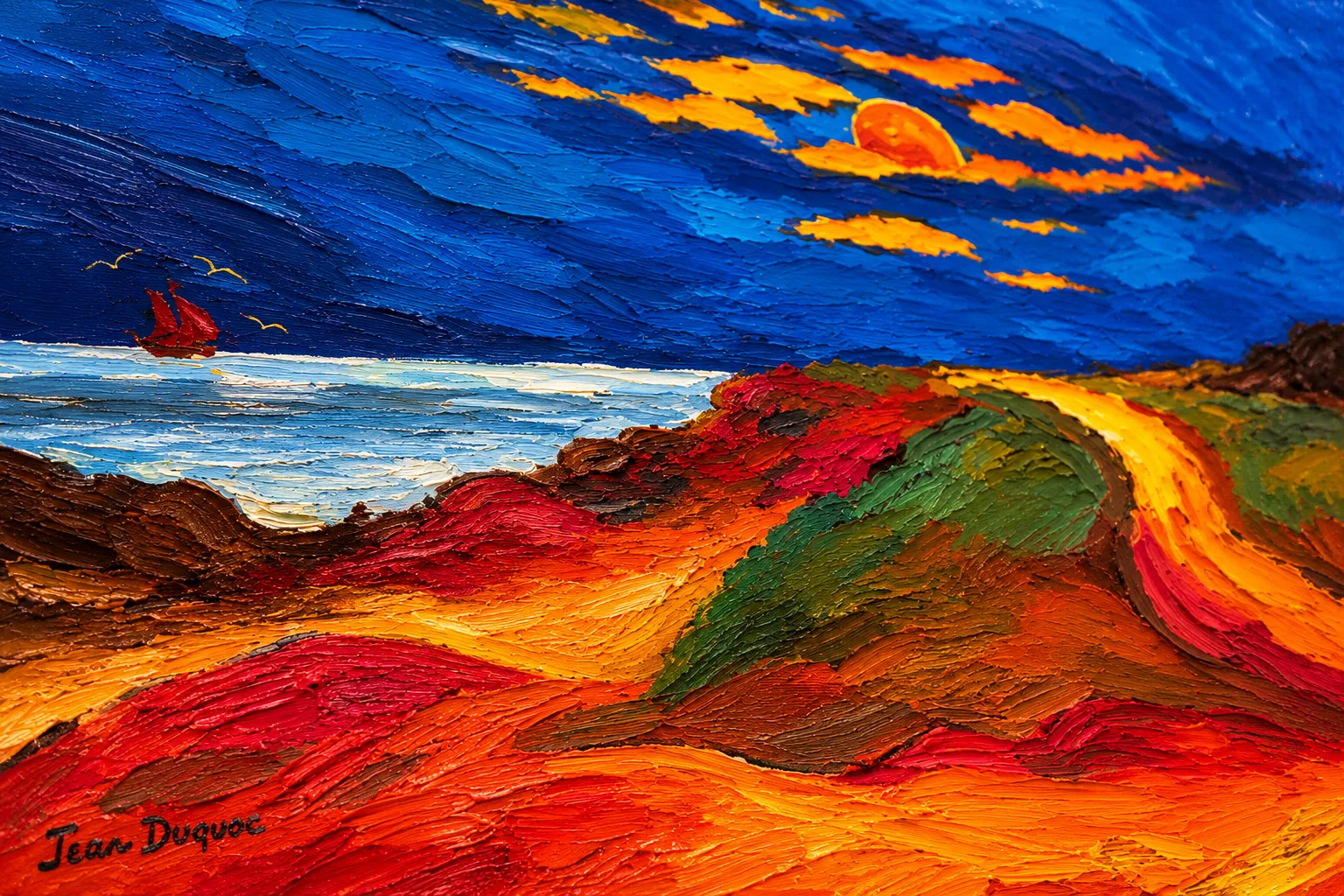
Brilliant reds, vibrant oranges, luminous yellows and deep blues covered the walls.
More strikingly, Margo herself seemed transformed.
After a difficult breakup, she was smiling again, making plans and rediscovering her enthusiasm for life.
Had she fallen in love?
"Not yet," she laughed. "But look at this painting. It saved me."
Every morning, she explained, she drank her tea in front of a colorful landscape she had brought back from France.
That daily encounter had become a personal ritual, helping her begin the day with renewed optimism.
The artist was Jean Duquoc, a French painter born in Brittany in 1937.
His expressive landscapes transform familiar scenery into compositions of exceptional color and emotional intensity.
In Le Chemin Mauve, a pathway opens towards the horizon, suggesting movement, possibility and the promise of something beyond the visible landscape.
One of his works bears a title that could summarize his philosophy: Je crois à la beauté — I Believe in Beauty.
Margo's experience is personal, not proof that painting can treat psychological distress.
But it reveals something important about our relationship with art.
Not every meaningful aesthetic experience is calming.
Sometimes, beauty inspires action, optimism and the desire to embrace life again.
Zao Wou-Ki had offered me silence.
Jean Duquoc had given Margo a reason to rediscover her own energy.
Serenity is not always quiet. Sometimes it arrives in the most vibrant colors.
And there was a delightful irony in my discovery.
I had traveled to California to escape my reflections on Neuro-Luxury.
They were waiting for me on Margo's living-room walls.
Discover Jean Duquoc, Le Chemin Mauve
This experience echoes our article on Neuro-Luxury and Longevity: The Art of Adding Life to Our Years.
Corol: Rediscovering the Value of Wonder
The fourth artist brings another dimension to this reflection: our emotional connection with nature.
Corol, a French sculptor whose artistic journey began in his mother's flower shop, has developed a creative universe shaped by botanical forms and natural materials.
His career has included collaborations and presentations associated with prominent names in French luxury, including Guy Savoy, Pierre Cardin and Maxim's.
Yet what interests me most is his ability to transform seemingly ordinary elements into poetic sculptures.
In his See Gorgone's World collection, branches, wood, moss and marine sea fans become mysterious organic compositions.
What might otherwise go unnoticed acquires a new presence.
Corol's work reflects an essential idea behind Slow Luxury: the ability to slow down, observe and find beauty in the unexpected.
In a culture increasingly obsessed with exclusivity, perhaps one of the rarest privileges is still being capable of wonder.
After all, what is the value of possessing extraordinary things if we have lost the ability to appreciate them?
Explore contemporary art at Luxury World For You.
Art And Neuroscience: What Does The Research Actually Tell Us?
Our emotional responses to art are deeply personal. But researchers are increasingly investigating whether aesthetic experiences can also produce measurable physiological changes.
A landmark 2019 review by the World Health Organization, synthesizing evidence from more than 3,000 studies, identified the potential role of artistic engagement in supporting health and well-being.
More recently, research published in Brain, Behavior, and Immunity in 2026 examined how viewing original artworks in a gallery compared with seeing reproductions in a laboratory.
The study involved 50 adults.
Following approximately 20 minutes of viewing, researchers observed two notable changes in the gallery group:
-
22% lower salivary cortisol, a hormone associated with the stress response.
-
30% lower salivary interleukin-6 (IL-6), a marker involved in inflammatory processes.
The reductions were greater than those observed in the laboratory group.
These findings are intriguing, but they should not be overstated. The sample was small, the environments differed and the research did not establish lasting health benefits.
Nevertheless, the results suggest that experiencing original art in a gallery may involve physiological responses as well as subjective emotions.
For collectors, curators, architects and luxury hospitality professionals, this opens a compelling field of inquiry.
The question is no longer simply whether art makes an environment more beautiful.
It is also how encounters with art may shape the human experience of that environment.
Sources: World Health Organization, 2019 | Worrell et al., Brain, Behavior, and Immunity, 2026
The $59.6 Billion Art Market And The Value Money Cannot Measure
According to the Art Basel & UBS Global Art Market Report 2026, worldwide art sales reached approximately $59.6 billion in 2025, up 4% year-on-year.
France, the fourth-largest art market globally, recorded $4.5 billion in sales, an increase of 9%.
These figures demonstrate the continuing importance of art as a cultural asset and international market, even amid geopolitical and economic uncertainty.
Read the Art Basel & UBS Global Art Market Report 2026.
For sophisticated collectors, financial considerations remain essential.
Authenticity, provenance, scarcity, conservation and market liquidity cannot be ignored.
Emotional attachment does not replace due diligence.
But neither should investment analysis obscure the personal dimension of collecting.
Two individuals can stand before the same painting, understand its history and know its estimated value.
One will walk away.
The other may return repeatedly.
The difference is not necessarily financial.
It is emotional.
And in a world where artificial intelligence can generate endless images and sophisticated algorithms can anticipate individual preferences, the unpredictability of that emotional encounter becomes particularly interesting.
This is the subject of our analysis, Neuro-Luxury: Why Emotion Is Luxury's New Scarcity.
It also raises another question: Can Artificial Intelligence Create Art That Truly Moves Us?
Technology may transform artistic production, discovery and collecting.
But it cannot guarantee what an individual will feel.
Neuro-Luxury: Beyond Ownership, Towards Experience
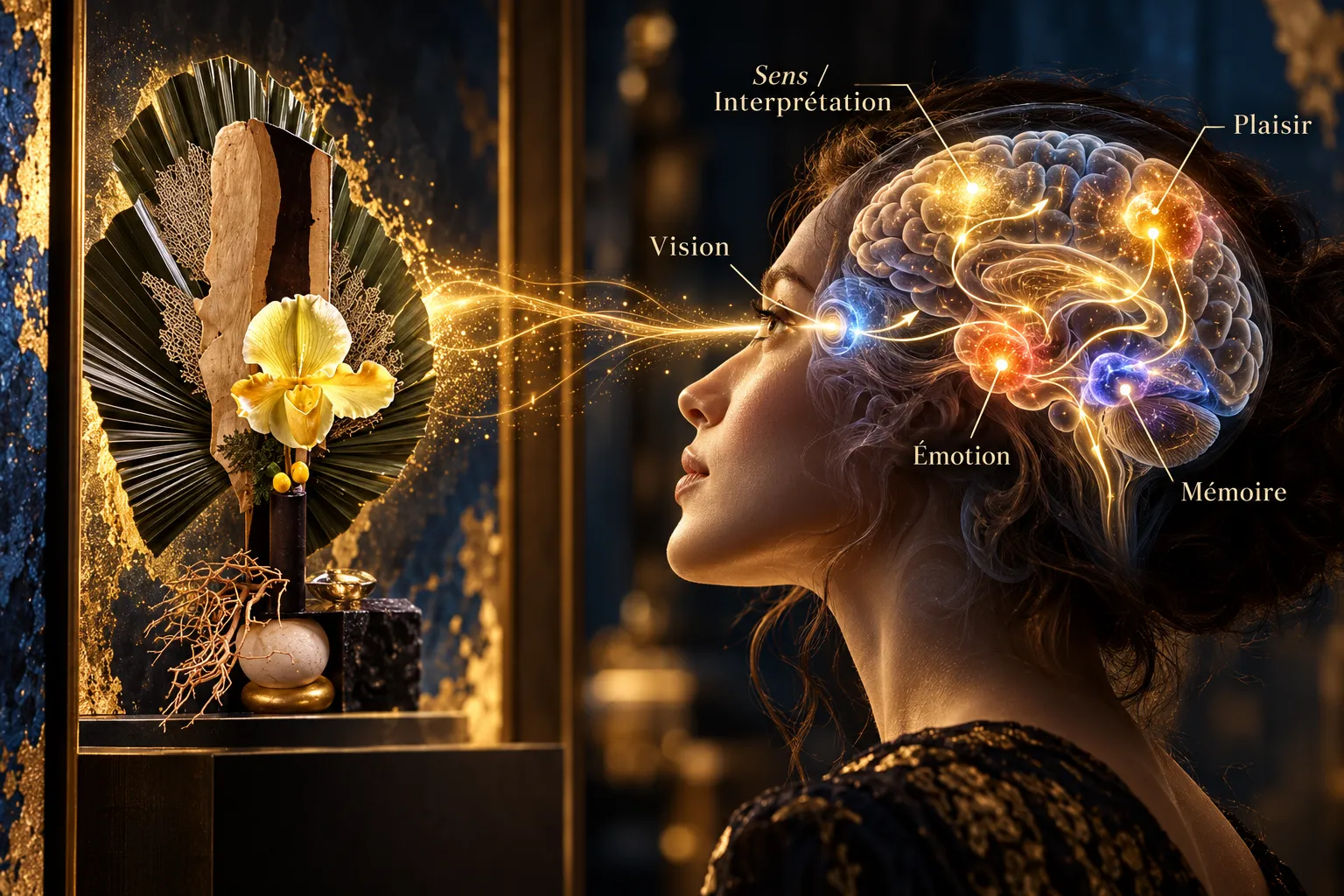 The broader luxury industry is increasingly interested in well-being, longevity and meaningful experiences.
According to the Global Wellness Institute, the global wellness economy reached $6.8 trillion in 2024 and is projected to approach $9.8 trillion by 2029.
These figures encompass multiple wellness sectors, not specifically art or luxury. Yet they illustrate the growing economic importance of quality of life.
Source: Global Wellness Economy Monitor 2025.
At Luxury World For You, this evolution informs our exploration of Neuro-Luxury: an editorial approach examining how emotion, memory and sensory experience influence the way we perceive exceptional objects, places and moments.
It is not a medical discipline or a promise of neurological transformation.
It is a different way of asking what makes luxury meaningful.
The distinction is simple.
Slow Luxury invites us to slow down. Neuro-Luxury invites us to feel.
And contemporary art offers perhaps one of its most compelling expressions.
Can Art Save The World?
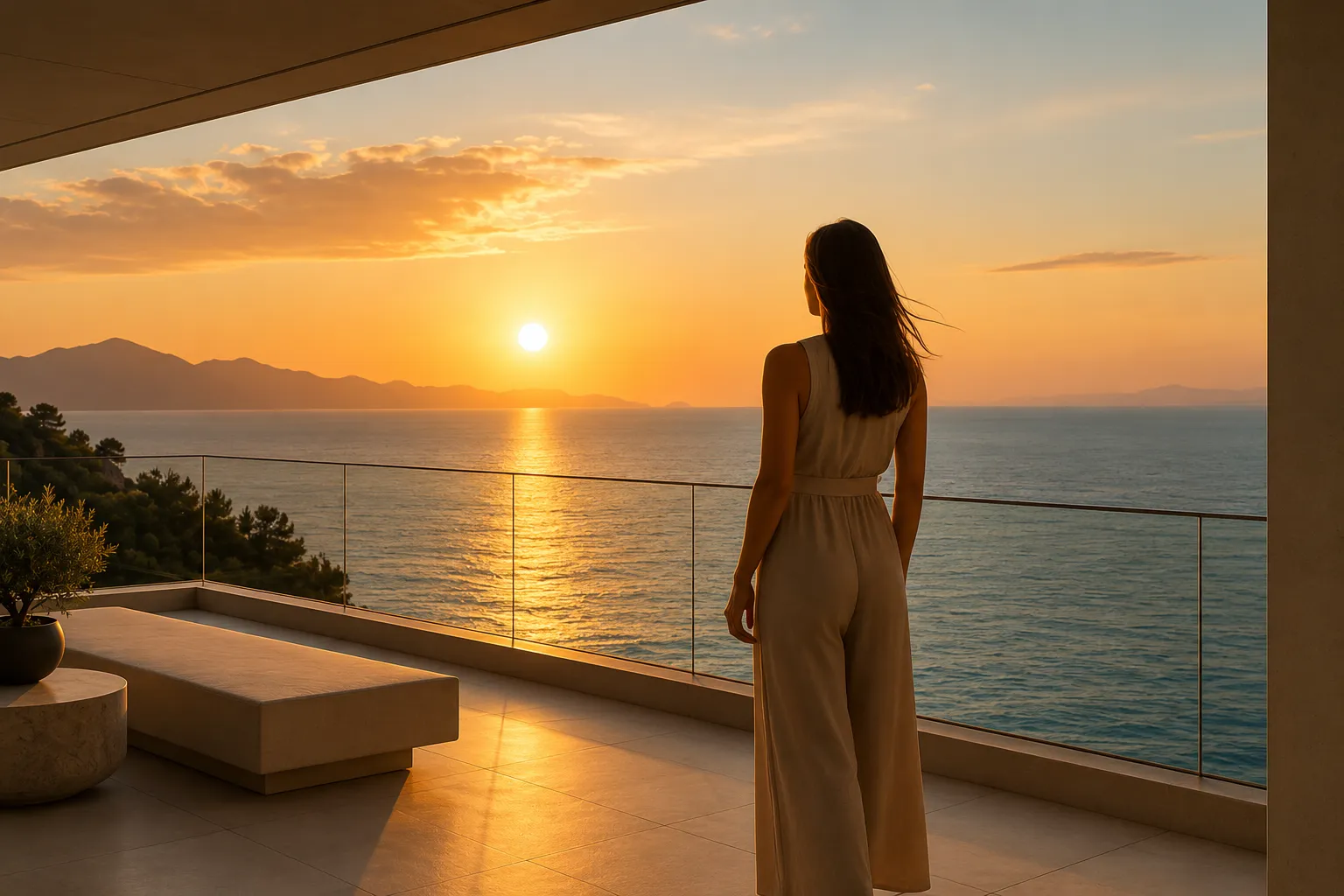 I keep thinking about that afternoon in Paris.
Outside, the tensions and uncertainties of a troubled world.
Inside, a small blue painting by Zao Wou-Ki.
For a few moments, I felt that the world had recovered its balance.
I think, too, of Margo across the Atlantic, rediscovering her optimism each morning through Jean Duquoc's vibrant colors.
Zao Wou-Ki offered silence. Wang Keping, the sensuality of material. Jean Duquoc, the joy of color. Corol, the wonder of nature.
Four artists. Four emotional experiences.
One essential insight.
The art market can measure the price of a work. Neuroscience is beginning to investigate its effects on our well-being.
But neither financial models nor scientific measurements can fully explain the intimate encounter between an artwork and the person experiencing it.
Art will not resolve geopolitical conflicts or economic crises.
But it may help us preserve something just as essential to our humanity.
Our ability to experience beauty, rediscover hope and remain open to wonder.
Perhaps art cannot save the world. But it can help us live in it more beautifully.
Irina Terechina Larroque
Founder, Luxury World For You
NEURO-LUXURY by LUXURY WORLD FOR YOU
Discover our contemporary art collections.
Art. Emotion. The Art of Living.
FAQ — Art, Neuroscience & Neuro-Luxury
1. Can art improve mental well-being and reduce stress?
Scientific research suggests that experiencing art may help reduce stress and support emotional well-being. Studies in neuroaesthetics explore how visual art influences emotions, attention and physiological responses. However, individual experiences vary, and art is not a substitute for medical or psychological treatment.
2. What is Neuro-Luxury, and how is it redefining modern luxury?
Neuro-Luxury is an editorial concept developed by Luxury World For You that explores the relationship between sensory experiences, emotions and luxury. It shifts the focus beyond ownership, prestige and exclusivity towards the personal meaning and emotional value of art, design, architecture and exceptional experiences.
3. How does contemporary art influence our emotions?
Contemporary art engages our perception, memories and imagination through colors, forms, textures and personal associations. Zao Wou-Ki's abstract paintings may inspire serenity, Wang Keping's sculptures evoke sensuality, Jean Duquoc's vibrant landscapes suggest optimism, while Corol's organic creations invite wonder. Each viewer experiences these emotions differently.
4. What is the difference between Slow Luxury and Neuro-Luxury?
Slow Luxury emphasizes authenticity, craftsmanship, meaningful experiences and taking time to appreciate beauty. Neuro-Luxury focuses more specifically on the emotional and sensory dimensions of those experiences.
Slow Luxury invites us to slow down. Neuro-Luxury invites us to feel.
5. Why is the emotional value of art important for collectors?
An artwork's market value depends on factors such as authenticity, provenance, rarity, condition and demand. Its emotional value is more personal, reflecting the memories, sensations and feelings it evokes. For collectors, these two dimensions can complement each other, making art both a cultural asset and a meaningful part of everyday life.
6. How can you choose contemporary art that enhances your well-being?
Start by observing your emotional response rather than focusing exclusively on an artist's reputation or market price. Does the artwork inspire calm, joy, curiosity or wonder? Do you feel drawn to look at it again? A meaningful art collection combines personal connection with informed decisions about authenticity, quality and provenance.
SOURCES AND REFERENCES
1. World Health Organization (WHO), 2019
Fancourt, D., & Finn, S. What Is the Evidence on the Role of the Arts in Improving Health and Well-Being? A Scoping Review.
Read the WHO research report
2. Worrell et al., 2026
The Physiological Impact of Viewing Original Artworks in a Gallery vs. Reproductions in a Laboratory: A Comparative Study.
Brain, Behavior, and Immunity, Volume 137, Article 106789.
Read the scientific study
3. Art Basel & UBS, 2026
The Art Basel & UBS Global Art Market Report 2026.
Arts Economics, Clare McAndrew.
Explore the Global Art Market Report
4. Global Wellness Institute, 2025
Global Wellness Economy Monitor 2025.
Explore the Global Wellness Economy Report


